Testily.AI

AI Test Automation Tools: Why More Teams Are Changing How They Test

AI Test Automation Tools: Why More Teams Are Changing How They Test A few years ago, most teams were excited just to automate testing, and honestly, that made sense. Manual regression cycles were exhausting. Repetitive testing consumed entire sprints. Automation looked like the obvious answer. For a while, it worked exactly the way teams hoped it would. Then products became larger. Releases became more frequent. Interfaces changed constantly, and suddenly the thing that was supposed to save time started demanding more of it. That’s usually the moment teams begin seriously looking at AI test automation tools. Not because automation stopped working. Because maintaining automation started becoming its own full-time problem.   Most Teams Don’t Notice the Problem Immediately Early automation rarely feels difficult. At smaller scale, everything feels manageable: Fewer workflows Fewer dependencies Fewer test cases Fewer release cycles Even fragile automation can survive for a while in that environment. The pressure builds slowly. One release introduces UI updates. Another changes workflows. A third adds integrations. Then the test suite starts reacting to all of it. A selector breaks here. A flow changes there. A previously stable script suddenly fails for no obvious reason. At first, teams treat these as isolated annoyances. Over time, they realize they’re spending more energy maintaining testing than benefiting from it. That’s one of the biggest reasons AI test automation tools are becoming more relevant now.   The Real Cost of Automation Shows Up Later Writing automation is usually not the hardest part. Keeping it healthy is. That’s the part most teams underestimate. Every automated test quietly creates future work: Updates Validation Debugging Reruns Maintenance Environment Adjustments None of this looks dramatic on its own. But together, it creates a system that constantly asks for attention. This is where platforms like Testily.AI starts becoming valuable, not because they eliminate testing effort completely, but because they reduce how much ongoing maintenance the system requires to stay usable.   Why Traditional Automation Starts Feeling Heavy The issue isn’t that traditional automation is “bad.” A lot of teams still rely on it successfully. The problem is that most traditional frameworks depend heavily on stability. Modern products are rarely stable in that way anymore. Interfaces evolve constantly. User journeys shift. Business logic changes faster than automation frameworks can comfortably absorb. That creates a cycle most QA teams recognize: Something changes Tests break Someone investigates Scripts get updated Pipelines rerun Confidence drops slightly Then the same thing repeats next sprint. Eventually, the system starts feeling heavier than expected. That’s where AI test automation tools are changing the conversation.   AI Testing Is Really About Adaptability A lot of people hear “AI testing” and imagine fully autonomous systems replacing QA teams. That’s usually not what teams actually need. The practical value is much simpler. Adaptability. Modern AI test automation tools are designed to handle change more naturally: Recognizing UI shifts Identifying unstable behavior Reducing repetitive fixes Helping teams maintain reliable coverage Minimizing fragile automation patterns The important shift isn’t just faster testing. It’s less operational friction around testing. That difference matters more than most teams expect.   Flaky Tests Are Often the Breaking Point There’s one issue that consistently pushes teams toward newer testing approaches. Flaky tests. Almost every engineering team has experienced this: A test fails. Nobody touched the code. Someone reruns it. Now it passes. At first, teams tolerate it. Later, it starts damaging trust. People begin second-guessing failures: “Is this real?” “Should we rerun it?” “Maybe the pipeline glitched.” That hesitation creates delay everywhere. Releases slow down. Confidence drops. QA becomes reactive instead of reliable. This is one of the biggest areas where AI test automation tools help in practical ways. Platforms like Testily.AI helps teams identify unstable patterns earlier so pipelines become more predictable and require less manual intervention.   Faster Releases Changed the Pressure on QA Modern delivery cycles are very different from what most testing systems were originally built around. Teams now release: Continuously Weekly Daily Sometimes multiple times a day That pace changes everything. Testing systems that require constant manual upkeep struggle under continuous release pressure. The issue usually isn’t execution speed. It’s the operational overhead around keeping testing stable while the product keeps evolving. That’s why more organizations are investing in AI test automation tools now. Not because AI sounds impressive. Because maintaining older testing workflows at scale is becoming harder every year.   The Goal Isn’t More Automation This part is important. A lot of teams already have plenty of automation. What they actually need is: Less maintenance Fewer interruptions More stability Better confidence in results More tests alone don’t solve that. Sometimes they make it worse. The strongest QA systems are usually not the biggest ones. They’re the ones teams trust consistently. That’s one of the reasons platforms like Testily.AI focus heavily on reliability and maintenance reduction rather than simply increasing test volume.   QA Engineers Still Matter More Than Ever AI tools are improving quickly. But they still cannot: Understand business priorities Evaluate product risk Think like frustrated users Decide what quality actually means Replace exploratory thinking That’s still human work. What AI test automation tools do well is remove repetitive operational effort so QA teams can spend more time on higher-value decisions.That shift is already happening across modern engineering teams. Not replacement, but redistribution, and honestly, most QA engineers prefer that direction.   What Teams Usually Notice After the Shift Interestingly, the first improvement usually isn’t “faster testing.” It’s lighter workflows. Teams notice: Fewer reruns Fewer broken scripts Fewer noisy failures Less time fixing automation Smoother release preparation Gradually, the entire release cycle starts feeling less tense. That operational calm is usually the real sign the testing process is improving.   Why This Shift Will Keep Growing Software delivery is not slowing down. If anything, products are becoming the following: More connected More dynamic More continuously updated Which means testing complexity keeps increasing too. The teams that scale successfully won’t necessarily be the ones with the largest automation

Generate Test Cases from Requirements Without Slowing Down QA
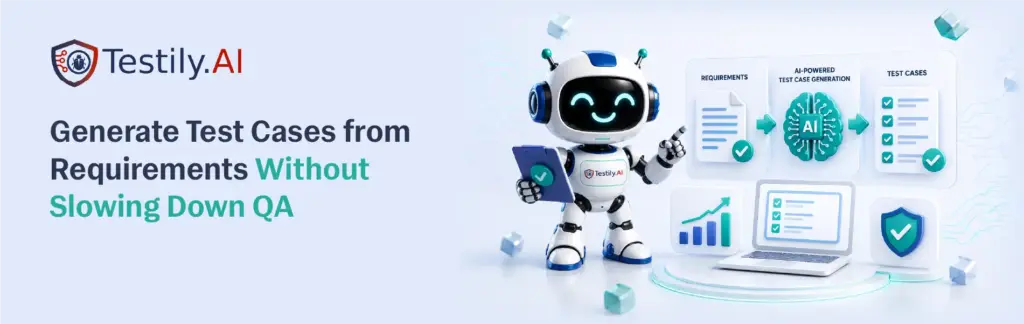
Generate Test Cases from Requirements Without Slowing Down QA Most teams don’t realize how much time disappears before testing even starts. Not execution. Not debugging. Not automation maintenance. Just creating the test cases themselves. Someone reads the requirement document. Someone interprets the flow. Someone decides what should be tested, what matters most, and what can be ignored for now. Then the real work begins. For growing teams, this process quietly becomes one of the slowest parts of QA. That’s exactly why more companies are trying to generate test cases from requirements using AI-driven workflows instead of relying completely on manual effort. The goal isn’t replacing QA thinking. It’s reducing repetitive work that keeps slowing teams down. That’s where platforms like Testily.AI start becoming useful in a very practical way.   Why Test Case Creation Takes Longer Than Teams Expect At first, writing test cases feels manageable. A few user stories. A few validation flows. Some regression checks. Nothing complicated. But as products grow, requirements become larger, releases become faster, and suddenly QA teams spend a surprising amount of time just trying to keep test scenarios updated. A small feature update creates: New edge cases Updated workflows Dependency changes Modified validations And all of that impacts testing. This is usually the point where teams begin looking for better ways to generate test cases from requirements without manually rebuilding everything every sprint.   The Problem Isn’t Writing Tests: It’s Rewriting Them Constantly This is what most teams eventually notice. Creating test cases once isn’t the hard part. Maintaining them is. Requirements evolve continuously: UI flows change Business rules shift APIs get updated Onboarding logic changes Workflows expand And QA teams end up spending more time updating old test cases than creating useful new ones. That’s one of the biggest reasons AI-driven requirement-based testing is becoming more important now. Not because teams want fewer testers. Because they want less repetitive maintenance work. Testily.AI helps reduce this burden by automatically turning product requirements into structured test scenarios that QA teams can refine instead of building manually from scratch every time.   Why Manual Requirement Analysis Slows Everything Down Most requirement documents are not written for testing. They’re written for: Product teams Stakeholders Developers Sprint planning Which means QA engineers still need to: Interpret intent Identify missing scenarios Map dependencies Define validations Organize coverage That process takes time, and when releases move quickly, QA teams rarely get enough breathing room to do it deeply every sprint. This is exactly where teams now use AI to generate test cases from requirements more efficiently. Instead of starting from a blank page, they start with structured suggestions that can be reviewed, expanded, and prioritized. That shift alone saves significant effort.   What AI Actually Changes in Test Case Generation There’s a misconception that AI simply “writes tests automatically.” That’s not really the valuable part. The real advantage is reducing the repetitive setup work around testing. Modern AI-driven platforms can: Analyze requirement documents Identify functional flows Detect possible validation paths Suggest edge cases Organize scenarios automatically Reduce repetitive documentation work That’s why teams increasingly use platforms like Testily.AI to generate test cases from requirements while keeping QA engineers focused on decision-making instead of repetitive drafting. The human role still matters heavily. AI accelerates preparation. QA teams still decide: What matters most What carries risk What deserves deeper validation   Why Faster Test Creation Matters More in Agile Teams In slower release cycles, manual test creation was manageable. Modern delivery cycles are different. Requirements change continuously: Sprint updates Mid-cycle feature revisions UI iterations Rapid deployments Hotfix releases When testing preparation cannot keep pace, QA becomes reactive instead of proactive. That’s when: Coverage gaps appear Rushed validation increases Edge cases get skipped Release confidence drops Teams that generate test cases from requirements earlier and faster usually maintain better testing stability over time. Testily.AI supports this by helping QA teams quickly transform changing requirements into structured test coverage without rebuilding everything manually every release cycle.   The Bigger Benefit Isn’t Speed; It’s Consistency Most teams initially look at AI because they want faster testing. But the long-term value usually comes from consistency. Manual test creation often varies depending on: Who wrote the cases How detailed the requirement was Time pressure Release urgency Team experience That inconsistency creates uneven coverage.AI-assisted workflows help standardize the process. Not perfectly. But enough to: Reduce missed scenarios Improve documentation consistency Maintain structured coverage Reduce dependency on individual workflows This is one of the reasons teams increasingly rely on Testily.AI to generate test cases from requirements across fast-moving projects.   What Teams Usually Notice First The first improvement usually isn’t “AI-generated testing.” It’s something simpler. QA teams stop spending hours formatting repetitive scenarios. Instead of: Rewriting similar validations Manually organizing flows Rebuilding regression scenarios repeatedly They spend more time: Reviewing risk Improving coverage quality Validating business logic Focusing on product behavior That’s a much healthier use of QA expertise, and over time, it significantly improves software testing efficiency.   Why This Matters for Scaling Products As products scale, requirement complexity grows faster than most teams expect. More integrations. More user flows. More dependency chains. More release coordination. Manual testing workflows struggle under that weight. Not because QA engineers lack skill. Because the volume itself becomes difficult to manage manually. That’s why the ability to generate test cases from requirements efficiently is becoming increasingly important for modern QA teams. Platforms like Testily.AI help reduce that operational pressure by simplifying test creation and keeping testing aligned with rapidly evolving product requirements.   AI Doesn’t Replace QA Judgment This part matters. AI can help organize, accelerate, and structure testing workflows. But it still cannot: Fully understand business risk Prioritize product impact Evaluate user frustration Define release confidence Replace exploratory thinking That’s still human work. The strongest teams are not replacing QA engineers with AI. They’re removing repetitive effort so QA teams can focus on higher-value decisions. That’s the practical role of platforms like Testily.AI plays a role in modern testing

Eliminating Flaky Tests with AI: Inside Testily.AI
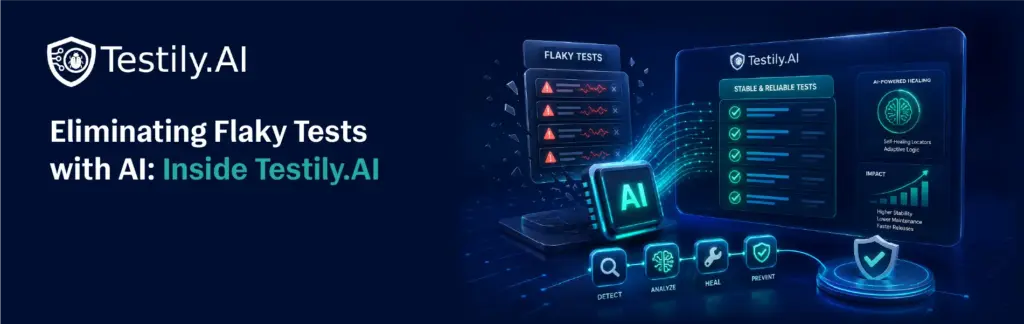
Eliminating Flaky Tests with AI: Inside Testily.AI Most teams don’t notice flaky tests becoming a problem immediately. At first, it feels small. A test fails unexpectedly. Someone reruns the pipeline. The next run passes. Everyone moves on. But over time, those small interruptions start repeating more often: Random failures Pipeline reruns Debugging sessions that lead nowhere Delays before release approvals Growing distrust in automation And eventually, teams realize the issue isn’t just unstable tests anymore. It’s the amount of engineering effort required to keep testing reliable. That’s exactly where eliminating flaky tests with AI becomes important, and why more teams are turning to platforms like Testily.AI.   Why Flaky Tests Become a Bigger Problem Over Time Flaky tests rarely create one dramatic failure. Instead, they slowly introduce friction into the development process. A single unstable test may only waste a few minutes. But across multiple pipelines, releases, and engineering teams, that overhead compounds quickly. This usually leads to: Slower CI/CD pipelines Reduced trust in automation Increased manual verification More maintenance work for QA teams Delayed software releases That’s why many growing engineering organizations are now prioritizing eliminating flaky tests with AI instead of simply rerunning unstable tests repeatedly.   What Actually Causes Flaky Tests Most flaky behavior comes from instability inside the testing system itself. Common causes include: Dynamic UI changes Timing and synchronization issues Environment inconsistencies Brittle selectors Shared test dependencies Unstable test data Network latency during execution Traditional automation frameworks often struggle here because they depend heavily on fixed scripts and static workflows. As products evolve faster, maintaining stability becomes increasingly difficult. This is one of the core problems with Testily.AI is designed to solve.   Why Traditional Approaches Stop Scaling Most teams initially try solving flaky tests manually: Adding retries Rerunning pipelines Updating selectors repeatedly Increasing debugging effort But eventually, this creates another problem: The maintenance effort itself becomes unsustainable. QA engineers spend more time fixing automation than improving product quality. This is exactly why eliminating flaky tests with AI is becoming more important in modern CI/CD environments. Because scaling unstable automation only increases operational overhead.   How Testily.AI Approaches Flaky Tests Differently Instead of relying entirely on rigid automation logic, Testily.AI uses AI-driven testing approaches to reduce instability at the source.   helps teams: Detect flaky behavior patterns automatically Identify unstable test executions early Adapt to UI and workflow changes more effectively Reduce repetitive script maintenance Improve CI/CD reliability Minimize false-positive failures This makes eliminating flaky tests with AI much more practical because teams spend less time reacting to unstable automation.   What Teams Usually Notice First Most teams are adopting Testily.AI doesn’t immediately notice dramatic speed improvements. What they usually notice first is: Fewer random failures Less pipeline noise Reduced reruns More stable test execution Improved trust in automation That operational stability matters more than most teams initially expect. Because once confidence in testing improves, release workflows become smoother naturally. This is one of the biggest reasons organizations invest in eliminating flaky tests with AI.   The Real Cost of Flaky Tests Isn’t Just Technical The hidden cost is usually operational. When automation becomes unreliable: Developers stop trusting failures QA teams spend more time validating results Pipelines slow down Releases require extra manual checks Over time, this creates friction across the entire delivery process. Platforms like Testily.AI helps reduce this operational burden by improving testing reliability without requiring constant manual intervention. That’s where the real value of eliminating flaky tests with AI becomes visible.   How Testily.AI Fits Into Modern CI/CD Workflows Modern release environments move continuously. Teams deploy frequently. Features evolve rapidly. Testing systems need to adapt just as quickly. Testily.AI is built specifically for these fast-moving environments by helping teams: Maintain stable CI/CD pipelines Reduce flaky test interruptions Improve automation reliability Support both manual and AI-driven testing workflows Reduce repetitive maintenance overhead Instead of forcing teams to constantly repair automation, Testily.AI helps testing systems remain reliable as products evolve.   Eliminating Flaky Tests with AI Improves More Than Testing The impact usually extends beyond QA itself. When flaky tests decrease: Releases move faster Developers trust pipelines more Debugging effort drops Delivery becomes more predictable QA stops feeling like operational overhead This is why eliminating flaky tests with AI is increasingly becoming a business efficiency decision, not just a testing improvement.   Why AI Matters More as Products Scale Smaller applications can sometimes tolerate unstable tests temporarily. But growing systems cannot. As products scale: Test coverage expands Workflows become more dynamic Release frequency increases Automation maintenance grows rapidly Without improving stability, QA effort naturally becomes harder to manage. That’s why more engineering teams are adopting Testily.AI as part of their long-term QA strategy. Because stable automation scales more effectively than constantly repaired automation.   Testily.AI Is Designed to Reduce Maintenance Friction The biggest challenge in modern QA isn’t creating tests. It’s maintaining them over time. Testily.AI helps reduce this burden by combining: AI-powered automation Adaptive test intelligence Flaky test detection CI/CD reliability improvements Lower maintenance workflows This allows teams to focus more on product quality and less on fixing unstable testing systems, and that’s ultimately what makes eliminating flaky tests with AI valuable in real engineering environments. A Practical Next Step If your team keeps rerunning pipelines, debugging inconsistent failures, or spending too much time maintaining unstable automation, the issue may not be your engineers. It may be the testing system itself. The teams improving release reliability today are not simply adding more tests. They’re reducing instability. That’s exactly where Testily.AI helps. By improving automation reliability, reducing flaky behavior, and minimizing maintenance effort, Testily.AI helps teams build faster, more stable release workflows without increasing QA overhead. → Book a demo to see how Testily.AI reduces flaky tests → Explore how AI-driven testing improves CI/CD stability   FAQs 1. What does eliminating flaky tests with AI mean? It means using AI-driven testing platforms like Testily.AI to detect unstable behavior, reduce inconsistent failures, and improve automation reliability. 2. Why are flaky tests a problem in

Measuring ROI of AI in QA Teams

Measuring ROI of AI in QA Teams Most teams don’t start exploring AI testing because they want to follow a trend. They start because QA slowly becomes harder to manage. At first, the pressure is subtle. Releases take slightly longer. Pipelines need more reruns. Automation starts requiring constant maintenance. QA engineers spend more time fixing tests than validating quality. Nothing looks completely broken, but the overall effort keeps increasing. That’s usually the point where teams begin seriously measuring the ROI of AI in QA teams. Because eventually, every growing engineering team starts asking the same question: “Are we spending too much effort just to keep testing operational?” This is exactly where platforms like Testily.AI starts becoming part of the conversation, not as another automation layer, but as a way to reduce the growing maintenance burden around QA.   Why Measuring ROI in QA Is More Difficult Than It Looks ROI in testing is rarely obvious. Unlike development, where progress is visible through shipped features, QA value often appears indirectly: Bugs prevented before release Faster deployment cycles Reduced release delays Fewer production failures Higher confidence in automation That’s why measuring the ROI of AI in QA teams can feel difficult initially. The benefits don’t always appear as one dramatic metric. Instead, they show up gradually across the entire workflow: Less manual intervention Reduced debugging effort Faster pipelines More stable automation Better release predictability This is where Testily.AI helps teams see practical improvements because the platform focuses heavily on reducing repetitive testing effort instead of simply adding more automation complexity.   Where QA Costs Actually Start Increasing Most teams assume testing becomes expensive because they need more coverage. But in reality, the bigger cost usually comes from maintaining that coverage over time. As products evolve: UI changes break test scripts Workflows shift faster than automation can keep up Flaky tests create reruns Pipelines slow down QA teams spend increasing time fixing unstable tests This is one of the biggest reasons organizations begin actively measuring the ROI of AI in QA teams. Because eventually, the problem stops being “Do we have enough tests?” And becomes, “Why does maintaining these tests require so much effort?” Testily.AI is designed specifically to address this challenge by helping teams reduce instability, minimize maintenance overhead, and keep testing scalable as products grow.   What AI Actually Changes in QA AI testing does not remove QA work completely. What it changes is the amount of repetitive effort required to maintain testing systems. Modern AI-driven platforms like Testily.AI helps teams: Reduce flaky test behavior Adapt to UI and workflow changes Detect instability patterns earlier Minimize manual script updates Improve CI/CD reliability Reduce repetitive debugging work This is where measuring the ROI of AI in QA teams starts becoming much more practical. Because the value becomes visible in everyday workflows: Faster releases Less maintenance effort Reduced pipeline interruptions Higher trust in automation Better engineering productivity And over time, those operational improvements create measurable ROI.   The Real Areas Where Teams See ROI 1. Reduced Test Maintenance This is often the first major improvement teams notice after adopting AI-driven testing platforms like Testily.AI. Instead of constantly fixing broken scripts after every product update, teams spend less time maintaining automation and more time improving quality. For many organizations, reduced maintenance effort becomes one of the clearest indicators when measuring the ROI of AI in QA teams. Because maintenance is where large amounts of hidden QA effort usually sit.   2. Faster Release Cycles Unstable pipelines create delays everywhere. Tests fail unexpectedly. Builds get rerun. Teams pause deployments to investigate whether failures are real. Over time, that friction slows down delivery significantly. Testily.AI helps reduce this friction by improving test stability and reducing unnecessary failures inside CI/CD pipelines. As pipelines become more reliable: Releases move faster Teams rerun builds less often Feedback loops improve Delivery becomes more predictable That operational speed is another major factor in measuring the ROI of AI in QA teams.   3. Better Use of QA Resources A surprising amount of QA effort is often spent on repetitive operational work: Fixing broken tests Updating scripts Rechecking unstable failures Managing automation noise When platforms like Testily.AI reduce that maintenance burden, QA engineers can focus more on the following: Risk analysis Product quality Exploratory testing Release confidence Strategic validation This improves overall team productivity without requiring teams to continuously increase testing resources.   4. Improved Confidence in Automation One of the hidden costs in QA is uncertainty. When teams stop trusting automation: Pipelines get rerun repeatedly Manual validation increases Releases slow down QA becomes reactive That lack of confidence creates operational drag across the entire delivery process. Testily.AI helps teams restore confidence by reducing flaky behavior, improving automation reliability, and making test outcomes more trustworthy. That improvement becomes another critical area when measuring the ROI of AI in QA teams.   Why Measuring ROI of AI in QA Teams Matters More Today Modern software teams release constantly. Testing systems are larger. Automation suites are more complex. CI/CD pipelines run continuously. Without improving efficiency, QA effort naturally scales upward with product complexity. That’s why more companies are now prioritizing measuring the ROI of AI in QA teams because testing is no longer just a technical activity. It directly impacts: Engineering productivity Release velocity Operational costs Delivery confidence Platforms like Testily.AI helps address these growing challenges by reducing the operational overhead required to maintain stable testing workflows at scale.   What Many Teams Miscalculate About ROI One common mistake is assuming ROI only means: Lower headcount Fewer QA engineers Reduced manual testing But that’s not how most successful teams measure value. The real ROI usually comes from: Reduced maintenance effort Faster release cycles Improved stability Less debugging time Higher automation reliability Better engineering focus Testily.AI supports this by helping teams eliminate repetitive maintenance work instead of replacing the human side of QA. Because the biggest value in AI testing often comes from reducing operational friction, not eliminating people.   Where Testily.AI Fits Into

Case Study: Cutting Test Maintenance by 75%

cutting-test-maintenance

Case Study: Cutting Test Maintenance by 75% At one point, the team wasn’t struggling with testing. They were struggling with maintaining tests. Every sprint looked the same: Tests failed. Scripts were fixed. Pipelines rerun, and then it happened again. That’s when they realized the problem wasn’t testing. It was maintenance. The situation The team was growing fast. More features. More releases. More automation. But over time: Nearly 40% of QA effort went into fixing tests UI changes caused frequent failures Pipelines required constant reruns Confidence in automation started dropping They weren’t scaling testing. They were scaling maintenance. The turning point Instead of adding more tests, they asked a different question: “Why are we fixing the same things repeatedly?” That’s when they explored AI-driven testing, not to replace automation, but to stabilize it. What they changed They didn’t rebuild everything. They focused on high-maintenance areas first: UI-heavy test suites Frequently failing regression tests Flaky test patterns Then they introduced the following: Self-healing capabilities Smarter failure analysis Adaptive test behavior (using Testily.AI to support this shift) How Testily.AI made the difference Instead of just running tests, Testily helped the team: Automatically adjust tests when UI or flows changed Detect and reduce flaky failures across pipelines Provide clearer insights into why tests failed Minimize the need for constant script updates So instead of reacting to failures, the system started handling a large part of the maintenance itself. What improved Within a few cycles, changes became visible: 1. Test maintenance dropped by 75% Fewer broken scripts. Less manual fixing. 2. Flaky tests reduced significantly Failures became more reliable and meaningful. 3. Pipeline stability improved Fewer reruns. Faster releases. 4. QA focus shifted From fixing tests → to improving product quality. What didn’t change This wasn’t magic. They still Reviewed test results Validated scenarios Stayed involved in QA decisions The difference? They stopped solving the same problems repeatedly. What other teams can learn from this Most teams don’t realize how much time goes into maintenance until they reduce it, and when they do, Testing feels lighter Releases feel smoother QA becomes proactive instead of reactive That’s the real impact of cutting test maintenance by 75%. Conversion-focused close If your team is stuck in a loop of fixing broken tests, it’s not a sign that automation isn’t working. It’s a sign that it needs to evolve. If you want to see how teams are reducing maintenance without rebuilding everything, it’s worth exploring how Testily.AI fits into your workflow. → See how much time your team spends fixing tests today → Or explore how AI-driven testing can stabilize your automation FAQs 1. Is 75% reduction realistic? Yes, especially in high-maintenance environments. 2. What role did Testily.AI play? It reduced repetitive fixes by adapting tests and improving stability. 3. Did the team replace their framework? No. They improved how it handled change. 4. How fast were results visible? Within a few sprints. 5. What’s the biggest takeaway? Reducing maintenance creates more impact than adding more tests.

Reducing QA Costs with Autonomous Testing

reducing-qa-costs-with-autonomous-testing

Reducing QA Costs with Autonomous Testing QA costs don’t usually look like a problem at first. They build up slowly. A few extra hours fixing tests. A few more reruns in CI/CD. A little more effort maintaining scripts. Individually, it feels manageable. Together, it becomes expensive. That’s where reducing QA costs with autonomous testing starts to make real sense, not as a cost-cutting trick, but as a way to stop unnecessary effort from piling up. Where QA costs actually come from Most teams assume costs come from tools or team size. But that’s rarely the real issue. Costs usually come from: Constant test maintenance Debugging flaky failures Rewriting broken automation Delayed releases due to unstable pipelines And the biggest problem? These aren’t one-time costs. They repeat every sprint. Why traditional automation increases cost over time Automation is supposed to save money, and initially, it does. But as systems evolve: UI changes break scripts Workflows shift Tests require constant updates So instead of reducing effort, automation starts demanding attention. That’s when QA costs stop being predictable. What changes with autonomous testing Autonomous testing doesn’t remove testing. It removes unnecessary effort around testing. Instead of constant manual fixes, systems start. Adapting to UI changes Identifying flaky patterns Reducing repetitive maintenance Keeping tests aligned with product changes That’s how reducing QA costs with autonomous testing actually happens by cutting down repeated work. Where Testily.AI fits into this This is exactly where Testily.AI becomes practical, not theoretical. Instead of teams constantly reacting to broken tests, Testily.AI helps by: Automatically adapting to UI and flow changes so scripts don’t break every time something shifts. Identifying flaky behavior across runs so teams don’t waste time guessing. Reducing manual test maintenance through self-healing capabilities. Keeping test suites aligned as the product evolves. The goal isn’t to replace your current setup. It’s to remove the parts of QA that keep adding cost without adding value. What cost reduction looks like in real terms Not “cutting budgets.” Not “reducing QA teams.” But: Less time fixing broken tests Fewer reruns in pipelines Lower maintenance overhead Faster, more predictable releases In simple terms: You stop paying for the same problem again and again. What this looks like over time At first: Slightly fewer failures Slightly less maintenance Then: Stable automation Predictable QA effort And eventually, QA stops feeling expensive because it stops being inefficient. Conversion-focused close If your QA effort keeps increasing without clear returns, it’s usually not a tooling problem; it’s a maintenance problem, and once you reduce that, everything else improves. If you want to see how teams are actually reducing QA costs in real workflows, it’s worth exploring how Testily.AI fits into your current process. → See how much time your team is spending on maintenance today → Or explore how autonomous testing can reduce that overhead FAQs 1. What is autonomous testing? Testing systems that can adapt, maintain, and optimize themselves over time. 2. How does it reduce QA costs? By minimizing repetitive maintenance and reducing manual effort. 3. Does Testily.AI replace QA teams? No. It helps teams focus on higher-value work instead of maintenance. 4. Is it hard to implement? Most teams start gradually with high-maintenance areas first. 5. What’s the biggest benefit? Lower maintenance effort and more predictable QA costs.

How AI Testing Improves Release Velocity by 3x

AI-Testing-Improves-Release-Velocity

How AI Testing Improves Release Velocity by 3x Most SaaS teams aren’t slow at building things. They’re slow at releasing them. Because somewhere between “this is ready” and “this is live,” things start slipping. A test fails. Someone reruns the pipeline. Another failure shows up. Now it’s unclear if it’s real… or just noise, and before anyone realizes it, something that should’ve gone out in hours takes days. That’s exactly where AI testing improves release velocity by 3x, not by making developers faster, but by removing the friction that quietly slows everything down. Where release velocity actually gets lost It’s rarely one big issue. It’s a collection of small interruptions that keep repeating: tests failing without clear reasons, time spent fixing broken scripts, rerunning builds just to “confirm” stability, and manual effort to keep automation working. Individually, none of these feel critical. Together, they create drag. That’s why many SaaS teams don’t say, “We have a velocity problem.” They just feel like releases take longer than they should. Why automation alone stops working at scale Automation does help at least in the beginning. You remove repetition. You speed up execution. But then things change. UI updates break tests. Flows evolve faster than scripts. Maintenance becomes constant, and now, instead of saving time, automation starts adding overhead. That’s one of the most common test automation challenges SaaS teams run into. What changes with AI testing This is where the shift happens. AI testing doesn’t just execute tests; it reduces the effort around them. It helps by adapting to small UI and workflow changes. reducing flaky failures, cutting down manual maintenance, and giving clearer signals on what is actually broken, and that’s the real reason AI testing improves release velocity by 3x because teams stop wasting time fixing tests and start trusting them again. What “3x faster” actually looks like Let’s keep this real. Before AI testing: A test fails → investigation starts Script gets fixed → pipeline reruns Still not sure → rerun again The release gets delayed After AI testing: Fewer unnecessary failures Faster identification of real issues Minimal test maintenance Pipelines move forward without constant interruption Nothing magical. Just less friction, and that’s where the 3x improvement actually comes from. Where SaaS teams feel the impact first 1. Pipelines stop getting stuck Stable tests mean CI/CD testing flows instead of constantly pausing. 2. Less time fixing automation Teams stop babysitting scripts and start focusing on quality. 3. Faster feedback loops Developers get clearer, quicker signals so decisions happen faster. 4. More confidence in releases When tests are reliable, teams don’t second-guess every failure, and that alone removes a surprising amount of delay. Why this matters more in SaaS than anywhere else SaaS teams don’t release occasionally. They release constantly. Which means even small delays compound fast. A few extra hours per release → become days over time. That’s why the idea that AI testing improves release velocity by 3x isn’t just about speed—it’s about staying competitive. What teams usually get wrong When releases slow down, the instinct is to add more tests, increase automation coverage, and run more pipelines, but more doesn’t mean faster. If the system itself isn’t stable, you’re just scaling inefficiency. The real shift happens when teams focus on the following: a. reducing maintenance b.  improving reliability c. eliminating unnecessary failures That’s where AI in testing actually starts delivering ROI. What this looks like over time At first, the improvement feels small. Slightly fewer failures. Slightly smoother pipelines. But over time: 1. releases become predictable 2. reruns become rare 3. QA stops feeling like a bottleneck And that’s when AI testing improves release velocity by 3x in a way that actually feels real. Where Testily.AI fits into this This is where tools like Testily.AI starts making a practical difference. Not by replacing your setup but by reducing the friction inside it. Instead of constantly fixing tests, teams can let tests adapt to small changes. Reduce flaky failures automatically and spend less time on maintenance, and that’s what actually improves release velocity: not more testing, but smoother testing. It’s not about speed. It’s about removing friction. Most teams think they need to move faster. But in reality, they just need fewer interruptions. Because once the friction is gone, speed follows naturally. That’s what people really mean when they say AI testing improves release velocity by 3x. If releases keep getting delayed… …it’s usually not because your team is slow. It’s because something in the process is creating drag, and more often than not, that drag comes from testing. If you want to see what smoother, faster releases actually look like in practice: → See how reducing test maintenance changes release speed → Or explore how AI testing fits into your current CI/CD workflow FAQs 1. How does AI testing improve release velocity by 3x? By reducing test failures, minimizing maintenance, and keeping pipelines moving without interruptions. 2. Is AI testing better than traditional automation? It complements automation by making it more stable and less maintenance-heavy. 3. Does this apply to all SaaS teams? Yes, especially teams with frequent releases and growing complexity. 4. What’s the biggest benefit? Less time fixing tests, more time shipping features. 5. Is it difficult to implement? Most teams start small, focusing on high-maintenance areas first.

Best AI Testing Tools in 2026 (Comparison Guide)

best-ai-testing-tools-2026

Best AI Testing Tools in 2026 (Comparison Guide) Game testing has never really been “easy.” But lately… it’s become something else entirely. Releases are faster. Updates are constant. Live environments don’t stay still for long. And somehow, QA teams are expected to keep everything stable in the middle of all that chaos. That’s why more teams are actively looking into the best AI testing tools 2026 not because it’s the latest trend, but because traditional approaches are starting to struggle in environments that change this fast. Why gaming teams are seriously looking at AI now Games don’t behave like typical applications. Players don’t follow predictable paths. UI keeps evolving. Performance changes depending on device, network, and usage patterns, and that creates a very specific kind of pressure on QA. Traditional automation starts to show cracks: tests break after small UI updates, edge cases are hard to anticipate, and maintenance becomes a constant task. This is exactly where AI in testing starts to feel less like an upgrade… and more like a necessity. What makes the best AI testing tools in 2026 different The best AI testing tools 2026 aren’t just faster versions of automation tools. They behave differently. Instead of rigid scripts, they learn from previous executions, adjust when UI or flows change, spot patterns in failures, and reduce repetitive fixes. In gaming, where unpredictability is normal, that adaptability is what actually makes a difference. What actually matters when choosing a tool not just feature lists A lot of comparison blogs just throw tool names at you. But in real teams, selection doesn’t work like that. Here’s what actually defines the best AI testing tools in 2026: 1. Adaptability Can the tool handle frequent UI and gameplay changes without constant rewrites? 2. Stability Does it reduce flaky tests… or just rerun them? 3. Coverage Can it simulate real gameplay behavior—not just fixed flows? 4. Maintenance effort Does it actually reduce effort over time? Because if maintenance stays the same, the tool isn’t really helping. Where traditional tools start falling behind Traditional test automation tools still have their place. But in gaming environments, they often struggle with dynamic UI, real-time updates, and non-linear user behavior, which leads to more test automation challenges than teams initially expect. Over time, it’s not execution that becomes the problem; it’s maintenance. How gaming teams are actually using AI today No one is throwing everything out and starting fresh. Most teams are doing something more practical. They use AI tools for regression testing in fast-changing environments, detecting flaky patterns early, and reducing ongoing maintenance, and they still use traditional automation where strict control is needed. That mix is what’s working right now. Where Testily.AI fits and why teams lean toward it If you look closely at what defines the best AI testing tools of 2026, one thing becomes clear: It’s not about how many features a tool has. It’s about how much effort it removes. That’s where tools like Testily.AI starts standing out, especially in gaming. Because gaming environments aren’t stable: UI shifts frequently, flows change often, updates are constant, and in those conditions, rigid scripts don’t hold up well. What Testily does differently is simple, but important: a. it adapts to small changes instead of breaking immediately b. it reduces the need for constant test fixes c. it helps teams spend less time maintaining tests Teams that adopt it usually notice fewer unnecessary failures, less time debugging, more consistent runs across updates. So when teams compare the best AI testing tools of 2026, Testily.AI often becomes a practical choice not because it replaces everything, but because it reduces the daily friction QA teams deal with, and honestly, that’s what most teams are looking for. What teams usually notice first Most teams expect speed improvements. But what they actually notice first is something else: less time fixing broken tests, fewer “false failures,” more stable results, and, over time, testing feels less reactive. Which, in gaming, is a big shift. One thing worth keeping in mind AI tools don’t replace QA. They don’t remove the need for thinking, planning, or validating. What they do is reduce repetitive effort, and in environments where change is constant, that reduction matters more than anything else. Why this shift isn’t slowing down Gaming isn’t getting simpler. If anything, it’s getting more complex: more devices, more real-time updates, more player-driven behavior, and in that kind of ecosystem, static testing approaches struggle to keep up. That’s why the conversation around the best AI testing tools in 2026 isn’t going away anytime soon. When testing finally starts feeling manageable At some point, every QA team hits this phase: You’re not building new tests. You’re just fixing old ones. That’s usually the signal. Not that testing is broken but that the approach needs to evolve, and once teams start using AI in a practical way, things don’t suddenly become perfect… They just become manageable again. If your testing effort keeps growing with every release… …it’s usually not just a tooling problem. It’s a sign that your testing approach isn’t adapting to change, and in gaming, that’s the difference between constantly fixing tests… and actually shipping with confidence. → Explore how Testily.AI supports scalable game testing → Or see how AI can reduce test maintenance in real workflows FAQs 1. What are the best AI testing tools in 2026? Tools that adapt to changes, reduce maintenance, and improve stability in real environments. 2. Why are gaming teams adopting AI testing? Because traditional automation struggles with dynamic UI, real-time updates, and unpredictable player behavior. 3. Do AI testing tools replace QA engineers? No. They reduce repetitive work and help QA teams focus on higher-value testing. 4. Are AI tools better than traditional automation? They’re more adaptable, but most teams use a combination of both. 5. What should teams prioritize when choosing a tool? Adaptability, stability, and long-term maintenance effort—not just features.

Test Automation vs Autonomous Testing: Key Differences

Test Automation vs Autonomous Testing

Test Automation vs Autonomous Testing: Key Differences Testing didn’t suddenly change… but expectations did Most teams didn’t wake up one day and decide to move from test automation to autonomous testing. It happened gradually. First, manual testing handled everything. Then automation came in to reduce repetitive work. Scripts replaced effort. Pipelines became faster. But over time, something else started happening. Tests began breaking more often. Maintenance started increasing. And instead of saving time, automation started demanding it. That’s usually when teams start exploring the difference between test automation vs autonomous testing, not out of curiosity, but out of frustration. What test automation actually does and where it struggles Test automation is still the backbone of most QA workflows. It allows teams to: Run regression tests quickly Reduce manual effort Integrate testing into CI/CD pipelines And it works well, especially in stable systems. But as products grow, the cracks start showing. Small UI change → tests fail, Workflow update → scripts break, Environment difference → inconsistent results, Over time, test automation introduces a hidden cost: maintenance, and that’s where the comparison of test automation vs autonomous testing becomes more practical than theoretical. What autonomous testing changes Autonomous testing doesn’t replace automation. It builds on top of it. Instead of relying only on fixed scripts, autonomous systems: Adapt to UI and workflow changes Detect flaky test patterns Reduce the need for constant manual updates Help maintain test stability over time The goal isn’t to eliminate automation. It’s to make it less fragile and less demanding. That’s the real shift in test automation vs autonomous testing. If you simplify the difference, it looks like this Test automation → Humans write and maintain scripts Autonomous testing → Systems help manage and adapt those scripts Everything else is just an implementation detail. Where teams actually feel the difference This isn’t about theory. It shows up in everyday work. Less time fixing broken tests Automation often creates a loop: fail → debug → fix → rerun → repeat. Autonomous testing reduces how often that loop happens. Fewer flaky failures Tests that fail randomly are one of the biggest issues in QA. Autonomous systems detect patterns and reduce instability, making results more reliable. More focus on real quality issues Instead of spending time maintaining scripts, teams can focus on the following: edge cases product behavior risk areas That’s where QA actually adds value. Test suites age more slowly In traditional automation, tests go out of date quickly. With autonomous testing, they adapt better as the product evolves. But it’s not a replacement story This is where a lot of confusion comes in. Autonomous testing doesn’t replace test automation, and it definitely doesn’t replace QA engineers. It reduces the maintenance burden that comes with scaling automation. So when comparing test automation vs autonomous testing, the real difference isn’t capability. It’s how much effort is required to keep things working. What teams usually get wrong Most teams don’t struggle because they picked the wrong approach. They struggle because they: Over-rely on UI-heavy automation Keep adding tests without improving structure Treat automation as a one-time setup Ignore maintenance until it becomes overwhelming That’s when QA starts feeling slow and heavy. Not because testing is broken, but because the system around it isn’t sustainable. Where Testily.AI fits in This is exactly where Testily.AI comes in. Instead of replacing your existing automation, it helps reduce the friction that builds up over time. With Testily.AI, teams can: ✔ Reduce flaky test failures ✔ Adapt to UI and workflow changes ✔ Minimize repetitive maintenance effort ✔ Improve stability across CI/CD pipelines So instead of constantly fixing tests, teams can focus on improving product quality. What actually works in real teams today No team is purely automated or fully autonomous. The reality is always a mix: Automation handles repetitive execution Autonomous systems reduce maintenance and instability Humans focus on strategy and quality decisions That balance is what makes modern QA workflows sustainable. It’s not about tools, it’s about effort When teams compare test automation vs autonomous testing, they often look at features. But the real difference is simpler: Where do you want your team’s time to go? Writing and fixing tests repeatedly? Or improving product quality and catching real issues? That’s the decision that actually matters. Spending too much time maintaining your test automation? Testily.AI helps you reduce instability, cut down maintenance effort, and build more reliable testing workflows. FAQs 1. What is the difference between test automation and autonomous testing? Test automation uses scripts created and maintained by humans, while autonomous testing uses AI to adapt and maintain tests over time. 2. Does autonomous testing replace automation? No. It enhances automation by reducing maintenance and improving stability. 3. What are flaky tests, and how do they relate? Flaky tests fail inconsistently. Autonomous testing helps detect and reduce these failures. 4. Is autonomous testing fully automatic? No. It still requires human oversight, especially for strategy and validation. 5. When should teams move toward autonomous testing? When maintaining automation starts taking more time than creating or running tests.

AI Testing Tools vs Selenium: What’s Better?

AI Testing Tools vs Selenium

AI Testing Tools vs Selenium: What’s Better? In healthcare, testing isn’t just about functionality. It’s about trust. A small issue isn’t just a bug; it can impact patient data, workflows, or decisions. So when teams compare AI testing tools vs Selenium, the question isn’t just “What’s better?” It’s “what’s safer?” This is where teams start exploring platforms like Testily.AI, which focus on improving test reliability and reducing instability in high-risk environments like healthcare. Where Selenium still works well Selenium has been around for years. It gives control. Teams can: build custom frameworks run detailed UI tests integrate into pipelines In stable systems, Selenium still works reliably. Where things start getting difficult As systems grow, maintenance increases. Tests break when: UI changes workflows evolve dependencies shift and in healthcare, instability isn’t acceptable. That’s where the limitations in AI testing tools vs Selenium become visible. This is also the stage where teams start noticing something else not just broken tests, but tests that fail inconsistently. The kind that pass on reruns and make it harder to trust results. Tools like Testily.AI help address this by detecting flaky behavior and improving consistency across test executions. What AI testing tools bring AI tools approach testing differently. Instead of rigid scripts, they adapt. They can: handle small UI changes detect flaky patterns reduce maintenance That’s why teams are increasingly exploring platforms like Testily.AI, which help reduce maintenance effort and improve stability without requiring constant test updates. But it’s not one vs the other This isn’t a replacement story. Selenium still has value. AI tools add flexibility. In healthcare, the best approach is often a combination. That’s something most teams eventually realize, especially after going through cycles where automation works well at first and then slowly turns into ongoing maintenance work. Testily.AI fits into this combined approach by enhancing existing automation setups and reducing the instability that often comes with scaling test suites. What actually matters in healthcare QA Not speed. Not trends. Reliability. That’s what should guide decisions in AI testing tools vs Selenium. Because when testing becomes inconsistent or delayed, it doesn’t just affect QA; it starts impacting the entire delivery flow. What teams eventually figure out The question isn’t which tool is better. It’s which approach reduces risk, and in healthcare, that answer matters more than anything else. And interestingly, many teams reach this decision only after trying to scale their testing or shift it earlier in the lifecycle and realizing that maintaining stability is a challenge of its own. How Testily.AI Helps In healthcare environments, testing reliability is critical. Testily.AI helps teams improve stability and reduce the risk caused by inconsistent or fragile test automation. With Testily.AI, teams can: ✔ Reduce flaky test failures in critical workflows ✔ Improve consistency across test runs ✔ Minimize maintenance effort in evolving systems ✔ Support reliable QA processes in CI/CD pipelines By reducing instability and improving confidence in test results, Testily.AI helps healthcare teams maintain high-quality and reliable software delivery. Looking to improve reliability in your testing workflows? Testily.AI helps healthcare teams reduce instability and build more trustworthy automation systems. FAQs 1. Are AI testing tools better than Selenium? Not always. It depends on the use case. 2. Why is Selenium still used? Because it offers control and flexibility. 3. What are the limitations of Selenium? High maintenance and fragility in changing systems. 4. How do AI tools help? They reduce maintenance and improve stability. 5. What’s best for healthcare testing? A balanced approach focused on reliability.