Testily.AI

AI Test Automation Tools: Why More Teams Are Changing How They Test

AI Test Automation Tools: Why More Teams Are Changing How They Test A few years ago, most teams were excited just to automate testing, and honestly, that made sense. Manual regression cycles were exhausting. Repetitive testing consumed entire sprints. Automation looked like the obvious answer. For a while, it worked exactly the way teams hoped it would. Then products became larger. Releases became more frequent. Interfaces changed constantly, and suddenly the thing that was supposed to save time started demanding more of it. That’s usually the moment teams begin seriously looking at AI test automation tools. Not because automation stopped working. Because maintaining automation started becoming its own full-time problem.   Most Teams Don’t Notice the Problem Immediately Early automation rarely feels difficult. At smaller scale, everything feels manageable: Fewer workflows Fewer dependencies Fewer test cases Fewer release cycles Even fragile automation can survive for a while in that environment. The pressure builds slowly. One release introduces UI updates. Another changes workflows. A third adds integrations. Then the test suite starts reacting to all of it. A selector breaks here. A flow changes there. A previously stable script suddenly fails for no obvious reason. At first, teams treat these as isolated annoyances. Over time, they realize they’re spending more energy maintaining testing than benefiting from it. That’s one of the biggest reasons AI test automation tools are becoming more relevant now.   The Real Cost of Automation Shows Up Later Writing automation is usually not the hardest part. Keeping it healthy is. That’s the part most teams underestimate. Every automated test quietly creates future work: Updates Validation Debugging Reruns Maintenance Environment Adjustments None of this looks dramatic on its own. But together, it creates a system that constantly asks for attention. This is where platforms like Testily.AI starts becoming valuable, not because they eliminate testing effort completely, but because they reduce how much ongoing maintenance the system requires to stay usable.   Why Traditional Automation Starts Feeling Heavy The issue isn’t that traditional automation is “bad.” A lot of teams still rely on it successfully. The problem is that most traditional frameworks depend heavily on stability. Modern products are rarely stable in that way anymore. Interfaces evolve constantly. User journeys shift. Business logic changes faster than automation frameworks can comfortably absorb. That creates a cycle most QA teams recognize: Something changes Tests break Someone investigates Scripts get updated Pipelines rerun Confidence drops slightly Then the same thing repeats next sprint. Eventually, the system starts feeling heavier than expected. That’s where AI test automation tools are changing the conversation.   AI Testing Is Really About Adaptability A lot of people hear “AI testing” and imagine fully autonomous systems replacing QA teams. That’s usually not what teams actually need. The practical value is much simpler. Adaptability. Modern AI test automation tools are designed to handle change more naturally: Recognizing UI shifts Identifying unstable behavior Reducing repetitive fixes Helping teams maintain reliable coverage Minimizing fragile automation patterns The important shift isn’t just faster testing. It’s less operational friction around testing. That difference matters more than most teams expect.   Flaky Tests Are Often the Breaking Point There’s one issue that consistently pushes teams toward newer testing approaches. Flaky tests. Almost every engineering team has experienced this: A test fails. Nobody touched the code. Someone reruns it. Now it passes. At first, teams tolerate it. Later, it starts damaging trust. People begin second-guessing failures: “Is this real?” “Should we rerun it?” “Maybe the pipeline glitched.” That hesitation creates delay everywhere. Releases slow down. Confidence drops. QA becomes reactive instead of reliable. This is one of the biggest areas where AI test automation tools help in practical ways. Platforms like Testily.AI helps teams identify unstable patterns earlier so pipelines become more predictable and require less manual intervention.   Faster Releases Changed the Pressure on QA Modern delivery cycles are very different from what most testing systems were originally built around. Teams now release: Continuously Weekly Daily Sometimes multiple times a day That pace changes everything. Testing systems that require constant manual upkeep struggle under continuous release pressure. The issue usually isn’t execution speed. It’s the operational overhead around keeping testing stable while the product keeps evolving. That’s why more organizations are investing in AI test automation tools now. Not because AI sounds impressive. Because maintaining older testing workflows at scale is becoming harder every year.   The Goal Isn’t More Automation This part is important. A lot of teams already have plenty of automation. What they actually need is: Less maintenance Fewer interruptions More stability Better confidence in results More tests alone don’t solve that. Sometimes they make it worse. The strongest QA systems are usually not the biggest ones. They’re the ones teams trust consistently. That’s one of the reasons platforms like Testily.AI focus heavily on reliability and maintenance reduction rather than simply increasing test volume.   QA Engineers Still Matter More Than Ever AI tools are improving quickly. But they still cannot: Understand business priorities Evaluate product risk Think like frustrated users Decide what quality actually means Replace exploratory thinking That’s still human work. What AI test automation tools do well is remove repetitive operational effort so QA teams can spend more time on higher-value decisions.That shift is already happening across modern engineering teams. Not replacement, but redistribution, and honestly, most QA engineers prefer that direction.   What Teams Usually Notice After the Shift Interestingly, the first improvement usually isn’t “faster testing.” It’s lighter workflows. Teams notice: Fewer reruns Fewer broken scripts Fewer noisy failures Less time fixing automation Smoother release preparation Gradually, the entire release cycle starts feeling less tense. That operational calm is usually the real sign the testing process is improving.   Why This Shift Will Keep Growing Software delivery is not slowing down. If anything, products are becoming the following: More connected More dynamic More continuously updated Which means testing complexity keeps increasing too. The teams that scale successfully won’t necessarily be the ones with the largest automation

Eliminating Flaky Tests with AI: Inside Testily.AI
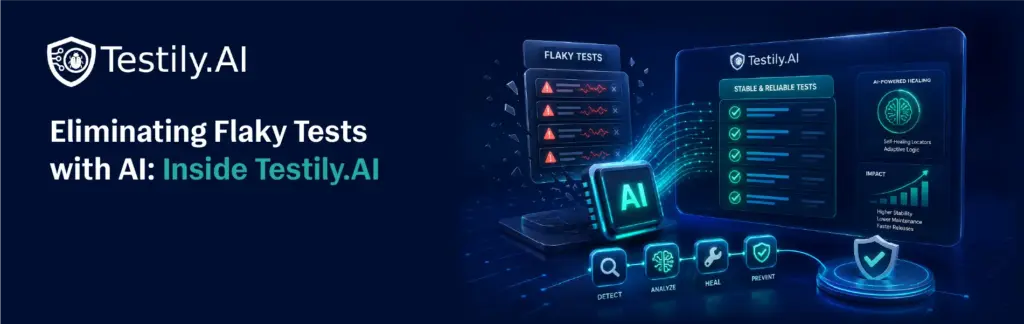
Eliminating Flaky Tests with AI: Inside Testily.AI Most teams don’t notice flaky tests becoming a problem immediately. At first, it feels small. A test fails unexpectedly. Someone reruns the pipeline. The next run passes. Everyone moves on. But over time, those small interruptions start repeating more often: Random failures Pipeline reruns Debugging sessions that lead nowhere Delays before release approvals Growing distrust in automation And eventually, teams realize the issue isn’t just unstable tests anymore. It’s the amount of engineering effort required to keep testing reliable. That’s exactly where eliminating flaky tests with AI becomes important, and why more teams are turning to platforms like Testily.AI.   Why Flaky Tests Become a Bigger Problem Over Time Flaky tests rarely create one dramatic failure. Instead, they slowly introduce friction into the development process. A single unstable test may only waste a few minutes. But across multiple pipelines, releases, and engineering teams, that overhead compounds quickly. This usually leads to: Slower CI/CD pipelines Reduced trust in automation Increased manual verification More maintenance work for QA teams Delayed software releases That’s why many growing engineering organizations are now prioritizing eliminating flaky tests with AI instead of simply rerunning unstable tests repeatedly.   What Actually Causes Flaky Tests Most flaky behavior comes from instability inside the testing system itself. Common causes include: Dynamic UI changes Timing and synchronization issues Environment inconsistencies Brittle selectors Shared test dependencies Unstable test data Network latency during execution Traditional automation frameworks often struggle here because they depend heavily on fixed scripts and static workflows. As products evolve faster, maintaining stability becomes increasingly difficult. This is one of the core problems with Testily.AI is designed to solve.   Why Traditional Approaches Stop Scaling Most teams initially try solving flaky tests manually: Adding retries Rerunning pipelines Updating selectors repeatedly Increasing debugging effort But eventually, this creates another problem: The maintenance effort itself becomes unsustainable. QA engineers spend more time fixing automation than improving product quality. This is exactly why eliminating flaky tests with AI is becoming more important in modern CI/CD environments. Because scaling unstable automation only increases operational overhead.   How Testily.AI Approaches Flaky Tests Differently Instead of relying entirely on rigid automation logic, Testily.AI uses AI-driven testing approaches to reduce instability at the source.   helps teams: Detect flaky behavior patterns automatically Identify unstable test executions early Adapt to UI and workflow changes more effectively Reduce repetitive script maintenance Improve CI/CD reliability Minimize false-positive failures This makes eliminating flaky tests with AI much more practical because teams spend less time reacting to unstable automation.   What Teams Usually Notice First Most teams are adopting Testily.AI doesn’t immediately notice dramatic speed improvements. What they usually notice first is: Fewer random failures Less pipeline noise Reduced reruns More stable test execution Improved trust in automation That operational stability matters more than most teams initially expect. Because once confidence in testing improves, release workflows become smoother naturally. This is one of the biggest reasons organizations invest in eliminating flaky tests with AI.   The Real Cost of Flaky Tests Isn’t Just Technical The hidden cost is usually operational. When automation becomes unreliable: Developers stop trusting failures QA teams spend more time validating results Pipelines slow down Releases require extra manual checks Over time, this creates friction across the entire delivery process. Platforms like Testily.AI helps reduce this operational burden by improving testing reliability without requiring constant manual intervention. That’s where the real value of eliminating flaky tests with AI becomes visible.   How Testily.AI Fits Into Modern CI/CD Workflows Modern release environments move continuously. Teams deploy frequently. Features evolve rapidly. Testing systems need to adapt just as quickly. Testily.AI is built specifically for these fast-moving environments by helping teams: Maintain stable CI/CD pipelines Reduce flaky test interruptions Improve automation reliability Support both manual and AI-driven testing workflows Reduce repetitive maintenance overhead Instead of forcing teams to constantly repair automation, Testily.AI helps testing systems remain reliable as products evolve.   Eliminating Flaky Tests with AI Improves More Than Testing The impact usually extends beyond QA itself. When flaky tests decrease: Releases move faster Developers trust pipelines more Debugging effort drops Delivery becomes more predictable QA stops feeling like operational overhead This is why eliminating flaky tests with AI is increasingly becoming a business efficiency decision, not just a testing improvement.   Why AI Matters More as Products Scale Smaller applications can sometimes tolerate unstable tests temporarily. But growing systems cannot. As products scale: Test coverage expands Workflows become more dynamic Release frequency increases Automation maintenance grows rapidly Without improving stability, QA effort naturally becomes harder to manage. That’s why more engineering teams are adopting Testily.AI as part of their long-term QA strategy. Because stable automation scales more effectively than constantly repaired automation.   Testily.AI Is Designed to Reduce Maintenance Friction The biggest challenge in modern QA isn’t creating tests. It’s maintaining them over time. Testily.AI helps reduce this burden by combining: AI-powered automation Adaptive test intelligence Flaky test detection CI/CD reliability improvements Lower maintenance workflows This allows teams to focus more on product quality and less on fixing unstable testing systems, and that’s ultimately what makes eliminating flaky tests with AI valuable in real engineering environments. A Practical Next Step If your team keeps rerunning pipelines, debugging inconsistent failures, or spending too much time maintaining unstable automation, the issue may not be your engineers. It may be the testing system itself. The teams improving release reliability today are not simply adding more tests. They’re reducing instability. That’s exactly where Testily.AI helps. By improving automation reliability, reducing flaky behavior, and minimizing maintenance effort, Testily.AI helps teams build faster, more stable release workflows without increasing QA overhead. → Book a demo to see how Testily.AI reduces flaky tests → Explore how AI-driven testing improves CI/CD stability   FAQs 1. What does eliminating flaky tests with AI mean? It means using AI-driven testing platforms like Testily.AI to detect unstable behavior, reduce inconsistent failures, and improve automation reliability. 2. Why are flaky tests a problem in

How AI Testing Improves Release Velocity by 3x

AI-Testing-Improves-Release-Velocity

How AI Testing Improves Release Velocity by 3x Most SaaS teams aren’t slow at building things. They’re slow at releasing them. Because somewhere between “this is ready” and “this is live,” things start slipping. A test fails. Someone reruns the pipeline. Another failure shows up. Now it’s unclear if it’s real… or just noise, and before anyone realizes it, something that should’ve gone out in hours takes days. That’s exactly where AI testing improves release velocity by 3x, not by making developers faster, but by removing the friction that quietly slows everything down. Where release velocity actually gets lost It’s rarely one big issue. It’s a collection of small interruptions that keep repeating: tests failing without clear reasons, time spent fixing broken scripts, rerunning builds just to “confirm” stability, and manual effort to keep automation working. Individually, none of these feel critical. Together, they create drag. That’s why many SaaS teams don’t say, “We have a velocity problem.” They just feel like releases take longer than they should. Why automation alone stops working at scale Automation does help at least in the beginning. You remove repetition. You speed up execution. But then things change. UI updates break tests. Flows evolve faster than scripts. Maintenance becomes constant, and now, instead of saving time, automation starts adding overhead. That’s one of the most common test automation challenges SaaS teams run into. What changes with AI testing This is where the shift happens. AI testing doesn’t just execute tests; it reduces the effort around them. It helps by adapting to small UI and workflow changes. reducing flaky failures, cutting down manual maintenance, and giving clearer signals on what is actually broken, and that’s the real reason AI testing improves release velocity by 3x because teams stop wasting time fixing tests and start trusting them again. What “3x faster” actually looks like Let’s keep this real. Before AI testing: A test fails → investigation starts Script gets fixed → pipeline reruns Still not sure → rerun again The release gets delayed After AI testing: Fewer unnecessary failures Faster identification of real issues Minimal test maintenance Pipelines move forward without constant interruption Nothing magical. Just less friction, and that’s where the 3x improvement actually comes from. Where SaaS teams feel the impact first 1. Pipelines stop getting stuck Stable tests mean CI/CD testing flows instead of constantly pausing. 2. Less time fixing automation Teams stop babysitting scripts and start focusing on quality. 3. Faster feedback loops Developers get clearer, quicker signals so decisions happen faster. 4. More confidence in releases When tests are reliable, teams don’t second-guess every failure, and that alone removes a surprising amount of delay. Why this matters more in SaaS than anywhere else SaaS teams don’t release occasionally. They release constantly. Which means even small delays compound fast. A few extra hours per release → become days over time. That’s why the idea that AI testing improves release velocity by 3x isn’t just about speed—it’s about staying competitive. What teams usually get wrong When releases slow down, the instinct is to add more tests, increase automation coverage, and run more pipelines, but more doesn’t mean faster. If the system itself isn’t stable, you’re just scaling inefficiency. The real shift happens when teams focus on the following: a. reducing maintenance b.  improving reliability c. eliminating unnecessary failures That’s where AI in testing actually starts delivering ROI. What this looks like over time At first, the improvement feels small. Slightly fewer failures. Slightly smoother pipelines. But over time: 1. releases become predictable 2. reruns become rare 3. QA stops feeling like a bottleneck And that’s when AI testing improves release velocity by 3x in a way that actually feels real. Where Testily.AI fits into this This is where tools like Testily.AI starts making a practical difference. Not by replacing your setup but by reducing the friction inside it. Instead of constantly fixing tests, teams can let tests adapt to small changes. Reduce flaky failures automatically and spend less time on maintenance, and that’s what actually improves release velocity: not more testing, but smoother testing. It’s not about speed. It’s about removing friction. Most teams think they need to move faster. But in reality, they just need fewer interruptions. Because once the friction is gone, speed follows naturally. That’s what people really mean when they say AI testing improves release velocity by 3x. If releases keep getting delayed… …it’s usually not because your team is slow. It’s because something in the process is creating drag, and more often than not, that drag comes from testing. If you want to see what smoother, faster releases actually look like in practice: → See how reducing test maintenance changes release speed → Or explore how AI testing fits into your current CI/CD workflow FAQs 1. How does AI testing improve release velocity by 3x? By reducing test failures, minimizing maintenance, and keeping pipelines moving without interruptions. 2. Is AI testing better than traditional automation? It complements automation by making it more stable and less maintenance-heavy. 3. Does this apply to all SaaS teams? Yes, especially teams with frequent releases and growing complexity. 4. What’s the biggest benefit? Less time fixing tests, more time shipping features. 5. Is it difficult to implement? Most teams start small, focusing on high-maintenance areas first.

AI Testing Tools vs Selenium: What’s Better?
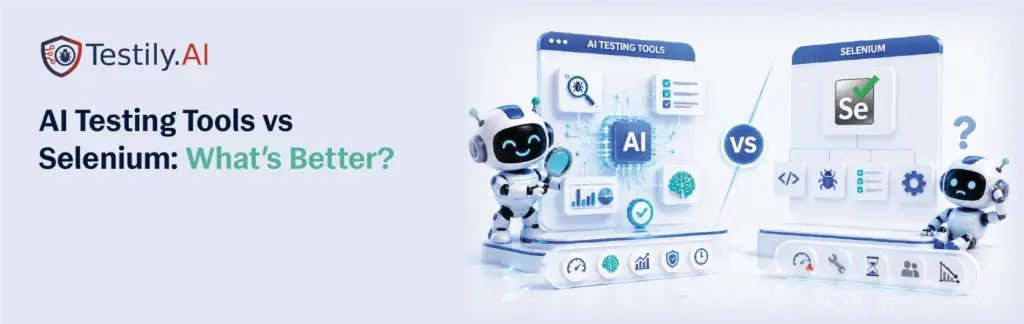
AI Testing Tools vs Selenium

AI Testing Tools vs Selenium: What’s Better? In healthcare, testing isn’t just about functionality. It’s about trust. A small issue isn’t just a bug; it can impact patient data, workflows, or decisions. So when teams compare AI testing tools vs Selenium, the question isn’t just “What’s better?” It’s “what’s safer?” This is where teams start exploring platforms like Testily.AI, which focus on improving test reliability and reducing instability in high-risk environments like healthcare. Where Selenium still works well Selenium has been around for years. It gives control. Teams can: build custom frameworks run detailed UI tests integrate into pipelines In stable systems, Selenium still works reliably. Where things start getting difficult As systems grow, maintenance increases. Tests break when: UI changes workflows evolve dependencies shift and in healthcare, instability isn’t acceptable. That’s where the limitations in AI testing tools vs Selenium become visible. This is also the stage where teams start noticing something else not just broken tests, but tests that fail inconsistently. The kind that pass on reruns and make it harder to trust results. Tools like Testily.AI help address this by detecting flaky behavior and improving consistency across test executions. What AI testing tools bring AI tools approach testing differently. Instead of rigid scripts, they adapt. They can: handle small UI changes detect flaky patterns reduce maintenance That’s why teams are increasingly exploring platforms like Testily.AI, which help reduce maintenance effort and improve stability without requiring constant test updates. But it’s not one vs the other This isn’t a replacement story. Selenium still has value. AI tools add flexibility. In healthcare, the best approach is often a combination. That’s something most teams eventually realize, especially after going through cycles where automation works well at first and then slowly turns into ongoing maintenance work. Testily.AI fits into this combined approach by enhancing existing automation setups and reducing the instability that often comes with scaling test suites. What actually matters in healthcare QA Not speed. Not trends. Reliability. That’s what should guide decisions in AI testing tools vs Selenium. Because when testing becomes inconsistent or delayed, it doesn’t just affect QA; it starts impacting the entire delivery flow. What teams eventually figure out The question isn’t which tool is better. It’s which approach reduces risk, and in healthcare, that answer matters more than anything else. And interestingly, many teams reach this decision only after trying to scale their testing or shift it earlier in the lifecycle and realizing that maintaining stability is a challenge of its own. How Testily.AI Helps In healthcare environments, testing reliability is critical. Testily.AI helps teams improve stability and reduce the risk caused by inconsistent or fragile test automation. With Testily.AI, teams can: ✔ Reduce flaky test failures in critical workflows ✔ Improve consistency across test runs ✔ Minimize maintenance effort in evolving systems ✔ Support reliable QA processes in CI/CD pipelines By reducing instability and improving confidence in test results, Testily.AI helps healthcare teams maintain high-quality and reliable software delivery. Looking to improve reliability in your testing workflows? Testily.AI helps healthcare teams reduce instability and build more trustworthy automation systems. FAQs 1. Are AI testing tools better than Selenium? Not always. It depends on the use case. 2. Why is Selenium still used? Because it offers control and flexibility. 3. What are the limitations of Selenium? High maintenance and fragility in changing systems. 4. How do AI tools help? They reduce maintenance and improve stability. 5. What’s best for healthcare testing? A balanced approach focused on reliability.

End-to-End Testing with AI: A Practical Guide for 2026
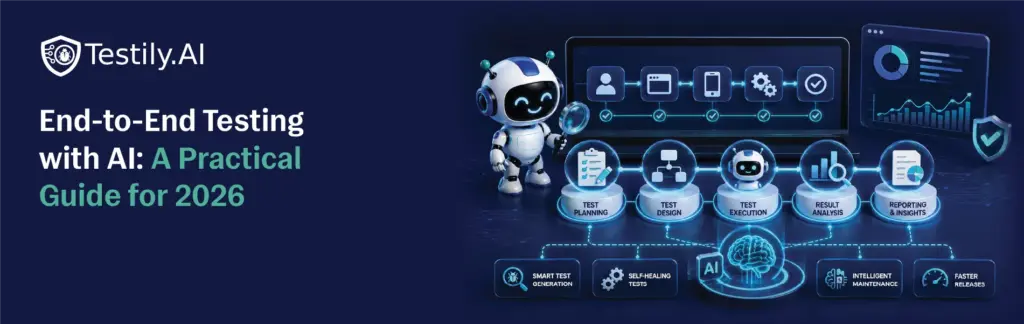
End-to-End Testing with Al: A Practical Guide for 2026 Banner

End-to-end testing always sounds better than it feels in real life. On paper, it’s simple. You run a full user flow, check everything from start to finish, and make sure nothing breaks. That’s the idea. But once you actually start doing it at scale, it becomes something else entirely. A small UI change breaks something random. A backend response shifts slightly. Some tests that used to run fine suddenly start failing “for no reason,” and you spend more time figuring out what broke the test than what broke the product. That’s usually when teams start looking at end-to-end testing with AI. Not because it’s trendy. More because they’re tired of fixing the same kind of failures again and again. This is usually when teams start exploring platforms like Testily.AI, which helps stabilize end-to-end tests and reduce repeated failures without constant manual fixes. E2E testing isn’t the issue… it just doesn’t stay stable Most teams don’t struggle to write end-to-end tests. That part is fine. The problem starts later when the product grows. Everything becomes connected in ways you don’t really notice at first. A locator that used to work suddenly doesn’t. A timing issue starts showing up only in CI. Test data behaves differently depending on the environment, and none of it feels serious individually. But together, it slowly turns into a maintenance problem. That’s what makes software testing automation feel heavier over time. Tools like Testily.AI helps reduce this maintenance overhead by adapting to small changes and keeping test flows stable as systems evolve. So what actually changes with AI? Honestly, not as much as people expect at first. You’re not replacing your framework. You’re not rebuilding your tests. The main change is simple tests don’t break as easily for small, stupid reasons. If something shifts slightly in the UI, the test doesn’t immediately fall apart, and when something does fail, it usually gives a bit more context instead of just “expected vs actual.” It sounds small, but in real QA work, that saves a lot of time. That’s where end-to-end testing with AI quietly starts making a difference. That’s where platforms like Testily.AI start making a practical difference by reducing unnecessary failures and improving test stability without adding extra maintenance work. Where you actually feel it in day-to-day work It’s not dramatic. It’s not like everything suddenly becomes perfect. It’s more like… fewer annoying interruptions. Fewer random failures that don’t mean anything You know those failures where nothing is actually broken? A button moved a few pixels. A class name changed. Something cosmetic, and suddenly 5 tests are red. With end-to-end testing with AI, those things don’t always blow up the suite anymore. Some tests just adjust or don’t fail unnecessarily. So the pipeline feels calmer. Less noisy. Debugging gets slightly less painful E2E debugging is usually frustrating because you don’t know where to start. Was it timing? Was it data? Was it real? You end up rerunning things just to understand the failure. AI doesn’t magically fix that, but it does help narrow things down a bit. Even that small improvement reduces a lot of everyday test automation challenges. Testily.AI supports this by identifying failure patterns and helping teams understand whether issues are real bugs or test instability. Tests don’t go out of date as fast This is something people underestimate. The product keeps changing, but tests don’t always keep up. After a while, you’re testing old behavior without realizing it. With end-to-end testing with AI, tests don’t drift as quickly because they adapt better when things change slightly. Maintenance slowly stops eating your time This is probably the biggest one. Instead of constantly fixing broken tests, you start spending more time actually looking at meaningful failures. Not everything disappears, obviously. But the constant firefighting reduces, and that’s where a good QA automation strategy actually starts feeling real instead of theoretical. How teams usually start using it Nobody flips a switch and changes everything. It usually starts with one painful area. A checkout flow that keeps breaking. A login test that fails randomly. A regression suite everyone avoids running on Friday. That’s where end-to-end testing with AI gets introduced first. Not everywhere. Just where things hurt the most. If it works there, teams slowly expand it. The part nobody says out loud AI doesn’t fix bad testing habits. If your test design is messy or your environments are unstable, you’ll still have problems. That doesn’t go away. What changes is how often you deal with the same issues. Instead of fixing the same flaky test every week, it shows up less frequently. That’s really the practical value of AI testing here. Where Testily fits in Testily.AI sits in that “reduce the pain” space. It’s not trying to replace QA teams or rewrite how testing works. It just helps with things like: reducing flaky test failures keeping E2E flows more stable handling small changes without constant fixes Basically, less time fixing tests, more time actually testing. What Teams Eventually Figure Out End-to-end testing was never the problem. It just doesn’t stay stable as systems grow, and that’s where most of the frustration comes from. Not writing tests… but maintaining them. With end-to-end testing with AI, things don’t become perfect. They just become less chaotic. Fewer false failures. Less guessing. Less time wasted on things that don’t really matter, and slowly, testing starts feeling manageable again instead of something that’s always behind. If your team is spending more time fixing E2E tests than trusting them, that’s usually the real signal. Struggling with unstable end-to-end tests? Testily.AI helps you reduce flaky failures and keep your test suites reliable as your product evolves. FAQs 1. What is end-to-end testing with AI? It’s just E2E testing where AI helps reduce unnecessary failures and makes tests more stable when the application changes. 2. Why do E2E tests break so often? Mostly because they depend on UI, timing, and data and all of that keeps changing in real projects. 3. Does AI stop

How AI Testing Can Reduce Test Maintenance by 70% and Why Teams Are Paying Attention
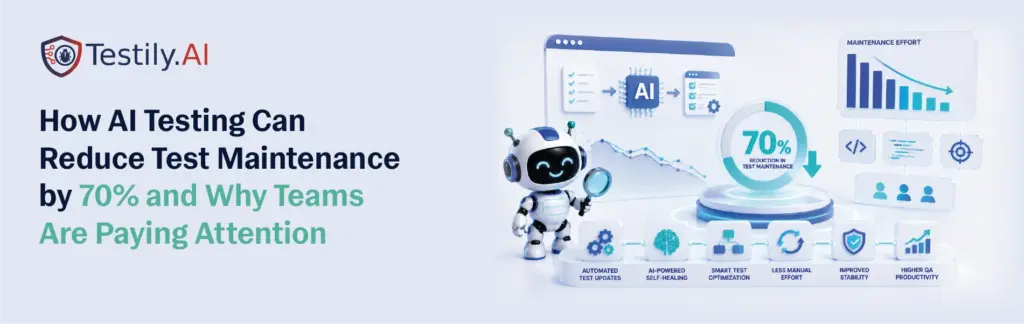
How AI Can Reduce Test Maintenance by 70% and Why Teams Are Finally Paying Attention

At some point, maintaining tests becomes the real work Most teams don’t feel the pain at the beginning. Automation feels like progress. Tests run. Pipelines look stable. Everything seems under control. But slowly, things change. A few tests fail. You fix them. Then more breaks, and without realizing it, your effort shifts from building coverage… to maintaining it. That’s usually when teams start seriously exploring AI testing not as a trend but as a way to reduce test maintenance by 70% and escape constant firefighting. The real issue isn’t automation; it’s what comes after Automation works. It runs tests. It improves coverage. But it also creates something teams don’t fully plan for: maintenance overhead. Every small change leads to: Broken locators Unstable runs Repeated debugging And this becomes routine. This is where AI starts making a practical difference by reducing the ongoing effort that automation creates. What actually changes with AI testing AI doesn’t replace your framework. It changes how much effort it needs. Tests become less fragile. Failures become clearer. Fixes take less time. That’s where teams begin to see how AI testing can reduce test maintenance by 70% in real workflows, not just in theory. Where teams feel the impact first 1. UI changes stop breaking everything Small UI updates no longer cascade into failures. Tests adapt. This is often the first sign that AI is working. 2. Failures become meaningful Instead of guessing: Is it flaky? Is it real? AI testing helps identify patterns. Which means less time debugging and more time fixing real issues. 3. Test suites stay aligned with the product Normally, tests lag behind product changes. With AI , they evolve alongside it. That alone significantly reduces maintenance effort. 4. Flaky tests stop dominating your time Flaky tests are one of the biggest hidden costs. They: Fail randomly Pass on reruns Kill trust AI testing reduces this instability by learning from patterns. This is where teams most clearly experience up to a 70% reduction in maintenance effort. What “70% reduction” actually means Let’s keep it real. It doesn’t mean Zero maintenance Zero debugging Fully autonomous QA It means: Fewer repetitive fixes Less debugging time More stable runs Reduced daily firefighting In simple terms: You stop solving the same problem repeatedly. How teams adopt AI testing (without disruption) No big overhaul. Most teams start small: Flaky test suites Regression packs High-maintenance flows Then introduce: Self-healing tests Failure pattern detection Intelligent updates That’s how AI testing scales gradually and safely. A quick reality check AI testing is powerful but not magic. If: Test design is weak Requirements are unclear Processes are messy Then AI will only optimize inefficiency. The best results come when AI supports a solid QA foundation. Why teams are paying attention now Earlier, maintenance was tolerated. Now it’s a problem. Because: Releases are faster CI/CD is constant QA cycles are shorter In this environment, AI isn’t optional anymore; it’s practical. Where Testily.AI fits in This is exactly what platforms like Testily.AI focuses on. Instead of replacing your system, it helps: Reduce repetitive maintenance Stabilize automation Keep tests aligned with changes So your team can focus on quality not upkeep. Why this shift matters Automation was supposed to reduce effort. But for many teams, it just shifted effort to maintenance. With AI testing, that balance starts correcting itself. Less fixing. More building. Better releases. FAQs 1. What is AI testing? AI testing uses machine learning to improve test stability, reduce maintenance, and adapt to changes automatically. 2. Can AI testing really reduce maintenance by 70%? Yes, especially in high-maintenance environments with flaky tests and frequent UI changes. 3. Does AI testing replace QA teams? No. It removes repetitive work so teams can focus on higher-value tasks. 4. How does AI testing handle flaky tests? It identifies patterns and reduces instability across runs. 5. Is it difficult to implement? No. Most teams start with a small, high-impact area.

AI in Software Testing: A Complete Guide for 2026
AI-in-Software-Testing_-A-Complete-Guide-for-2026

Testing doesn’t feel as straightforward as it used to If you’ve been in QA for a few years, you’ve probably felt this shift. Earlier, things were slower. Not perfect, but predictable. You had time to understand failures. Releases didn’t stack on top of each other. Even when something broke, it didn’t feel like ten other things changed at the same time. Now it’s… noisier. Things move fast. UI changes quietly. Flows get adjusted without much warning. And suddenly, tests that were fine last week start failing for reasons that aren’t always obvious. Nothing is completely out of control. But it doesn’t feel clean either. You’re spending more time keeping things working than you expected. That’s usually where AI in software testing starts coming up not because someone is chasing a trend, but because the current setup is starting to feel heavier than it should. This is usually when teams start exploring platforms like Testily.AI, which apply AI in a way that reduces effort without adding more complexity to the process. So what is AI in software testing, really? It sounds bigger than it is. At its core, it’s just about reducing how much manual effort goes into testing.Instead of writing every test yourself, updating every script, and fixing every break, the system starts taking over some of that work. It understands how parts of your application behave, creates tests around it, and adjusts when things change. You’re still in control. It’s just not all sitting on your shoulders anymore. That’s the practical version of it. Automation helped but it also created its own problems Most teams don’t regret moving to automation. It helped a lot in the beginning. Regression became easier. Repeated checks didn’t need to be done manually. Things felt faster. But over time, a different kind of work started showing up. Tests breaking after small UI changes. Fixes taking longer than expected. Failures that don’t clearly mean anything. Reruns just to be sure. Individually, none of it feels serious. But when it keeps happening, it adds up, and suddenly, a good chunk of QA time isn’t going into testing anymore. It’s going into maintaining the testing setup itself. That’s the part that starts wearing teams down. This is where AI starts to make sense Not as a replacement. More like a way to stop doing the same cleanup work again and again. Instead of everything breaking and someone jumping in to fix it, the system adapts a bit on its own. Tests get created without starting from scratch every time. Some changes don’t cause failures at all because the system adjusts. It doesn’t remove testing. It removes some of the effort around keeping testing alive. That’s the difference. Tools like Testily.AI are built around this idea, helping teams reduce repetitive maintenance by allowing tests to adapt as products evolve. It doesn’t feel like a big shift at first This is important. You don’t suddenly feel like you’ve moved to some advanced AI setup. What you notice first is smaller than that. You’re not fixing as many tests. You’re not questioning every failure. You’re not rerunning things as often just to double-check. Things feel… slightly less frustrating. That’s usually the first sign something improved. About “autonomous testing” without making it sound fancy A lot of people call this autonomous testing. All it really means is the system is handling more of the work that used to be manual. Creating tests. Updating them. Keeping them usable even when the product changes. So instead of constantly stepping in, you’re stepping in only when something actually needs attention. That’s it. Day-to-day, it just feels quieter You’re not managing tests all the time. They’re just… running. Failures make more sense. There’s less noise. You’re not spending half your time figuring out what went wrong with the test itself, and because of that, you can focus more on actual product issues. It doesn’t feel dramatic. It just feels easier to work with. Platforms like Testily.AI enable this shift by reducing noise in test results and improving overall reliability across the testing process. What teams usually notice first Not speed. It’s less friction. Fewer broken tests. Less second-guessing. Less back-and-forth before releases. You’re not stuck in that loop of “fail → check → rerun → check again.” and that changes how the whole QA cycle feels. Is AI replacing QA? Not really This question comes up a lot, but it doesn’t match what’s actually happening. The repetitive parts of QA are getting reduced. That’s true. But the parts that need thinking edge cases, weird behaviors, and usability issues those don’t go anywhere. If anything, those become more important once you’re not buried in maintenance work. Why this shift is happening now It’s mostly because everything else sped up. Development cycles are tighter. Products change more often. Expectations are higher, and testing setups that need constant manual effort just don’t keep up very well in that environment. So teams start looking for ways to reduce that effort. AI just happens to be one way of doing that. The simple version of all this Testing hasn’t changed. You’re still trying to make sure things work. What’s changed is how much effort it takes to keep testing useful. If that effort keeps increasing, something eventually has to give. AI helps bring that effort down. Not by replacing QA. Just by making it easier to keep up. If this feels familiar If your team spends a lot of time fixing tests, checking whether failures are real, or rerunning things just to be confident, that’s usually the signal. Not that testing is broken. Just that it’s taking more effort than it should, and when that keeps happening, adding more tests or more processes usually doesn’t solve it. You need less maintenance, not more work. That’s where tools like Testily.AI come in; they’re built around reducing that constant upkeep so teams can spend more time actually building instead of fixing tests. That’s where platforms like Testily.AI come in, designed to

What is Autonomous Testing? (And Why It’s Replacing QA Automation)

What-is-Autonomous-Testing-And-Why-Its-Replacing-QA-Automation

When QA Stops Feeling Helpful There’s a point most teams hit where QA stops feeling like it’s helping speed things up. It’s not sudden. Nothing breaks in a dramatic way. In fact, everything still “works.” Tests are running. Builds are going out. Bugs are being caught. But things start taking longer. At first it’s small. A bit more time before release. A few more failures to look into. Someone reruns a test just to be safe. Then it becomes normal, and that’s usually when teams start realizing something’s off. It’s not broken, just heavier than it should be. What Autonomous Testing Actually Means The term sounds bigger than it is. At its core, autonomous testing is just testing that doesn’t rely so much on humans constantly telling it what to do. Instead of writing and maintaining every test manually, the system uses AI to figure things out on its own. It can understand how your app behaves, generate tests around that, and adjust when things change. So instead of babysitting test scripts all the time, you let the system handle a lot of that work. That’s really it. Platforms like Testily.AI are built around this idea, using AI to reduce the need for constant manual test creation and maintenance. Where Traditional Automation Starts Struggling Automation isn’t the problem. Most teams benefit from it early on. But over time, it starts needing more attention than expected. Products change fast now. UI updates happen all the time. Flows get tweaked. Features get pushed out constantly, and every small change has a habit of breaking something in the test suite. Not because the product is broken. Just because the test expected things to look a certain way So now someone has to go in, check the failure, update the script, and rerun everything. That loop keeps repeating, and after a while, you realize a lot of time is going into maintaining tests instead of actually using them. The Usual Cycle (That Nobody Likes) If you’ve worked with QA automation, this probably feels familiar: You write tests. You run them. Some of them break. You fix them. You run them again, and then it happens again in the next release. It’s not that it doesn’t work. It just… never really settles. What Changes With Autonomous Testing Autonomous testing tries to reduce that constant fixing. Instead of breaking every time something small changes, it adapts. It can regenerate tests, adjust flows, and keep things working without needing someone to step in every time. So instead of spending hours figuring out why something failed, the system handles more of that in the background. It’s less maintenance, basically. Tools like Testily.AI take this further by automatically adapting to UI and workflow changes, helping teams avoid the usual cycle of fixing and rerunning tests. What It Feels Like in Practice It’s not something you actively manage all day. That’s actually the point. It runs in the background, explores the app, identifies important paths, and keeps testing them. When something changes, it adjusts instead of just failing. So your team isn’t stuck fixing tests constantly. They can focus on things that actually need attention. What Teams Usually Notice First Most people expect things to get faster, and they do. But the bigger difference is how much less annoying everything feels. Fewer random failures. Less rerunning. Less second-guessing whether something is actually broken. Things just feel more stable, and that makes releases feel easier. Is This Replacing QA Teams? No. It’s just changing what QA teams spend time on. Instead of dealing with repetitive work and constant maintenance, they get to focus on the parts that actually need thinking. Edge cases. Weird behaviors. New features. Real user experience issues. The role doesn’t go away. It just becomes less about fixing tests and more about improving the product. Why Teams Are Moving This Way Mostly because the old way doesn’t scale well anymore. As products grow and release cycles speed up, the amount of maintenance starts getting out of hand, and teams get tired of it. So they start looking for ways to reduce that effort. Autonomous testing fits into that pretty naturally. Not because it’s flashy. Because it removes a lot of the repetitive work. A Simpler Way to Look at It Automation helped teams move faster. But it still needed a lot of human effort to keep working. Autonomous testing reduces that effort. It’s not about doing more. It’s about needing to do less just to keep things running. What This Means for Your Team If your team spends a lot of time fixing tests, checking failures, or rerunning things just to be sure, that’s usually a sign. Not that testing is wrong. Just that the current setup needs too much care, and that’s where a different approach starts to make sense. Something that doesn’t break so easily. Something that doesn’t need constant attention. That’s the gap autonomous testing is trying to fill. A More Practical Next Step If this sounds familiar, you probably don’t need to rebuild everything. But it might be worth looking at how much effort your current setup actually takes to maintain. Because that’s usually where the real cost is. Tools like Testily.AI are built around reducing that effort, helping teams move toward autonomous testing without adding more complexity or extra work, and when that effort drops, everything else tends to get easier too. Platforms like Testily.AI are designed to bring autonomous testing into real workflows, helping teams reduce maintenance effort while improving reliability and speed. Ready to move beyond traditional automation? Testily.AI helps you adopt autonomous testing without the usual maintenance overhead. FAQs 1. What is autonomous testing? Testing that uses AI to create and maintain tests automatically. 2. How is it different from automation? It adapts to changes instead of relying on fixed scripts. 3. Does it replace QA engineers? No, it reduces repetitive work so they can focus on more important tasks. 4. Why do automated tests break often? Because they