


When QA Stops Feeling Helpful
There’s a point most teams hit where QA stops feeling like it’s helping speed things up. It’s not sudden. Nothing breaks in a dramatic way.
In fact, everything still “works.” Tests are running. Builds are going out. Bugs are being caught. But things start taking longer. At first it’s small. A bit more time before release. A few more failures to look into. Someone reruns a test just to be safe. Then it becomes normal, and that’s usually when teams start realizing something’s off. It’s not broken, just heavier than it should be.
What Autonomous Testing Actually Means
The term sounds bigger than it is. At its core, autonomous testing is just testing that doesn’t rely so much on humans constantly telling it what to do. Instead of writing and maintaining every test manually, the system uses AI to figure things out on its own. It can understand how your app behaves, generate tests around that, and adjust when things change. So instead of babysitting test scripts all the time, you let the system handle a lot of that work. That’s really it. Platforms like Testily.AI are built around this idea, using AI to reduce the need for constant manual test creation and maintenance.
Where Traditional Automation Starts Struggling
Automation isn’t the problem. Most teams benefit from it early on. But over time, it starts needing more attention than expected. Products change fast now. UI updates happen all the time. Flows get tweaked. Features get pushed out constantly, and every small change has a habit of breaking something in the test suite. Not because the product is broken. Just because the test expected things to look a certain way So now someone has to go in, check the failure, update the script, and rerun everything. That loop keeps repeating, and after a while, you realize a lot of time is going into maintaining tests instead of actually using them.
The Usual Cycle (That Nobody Likes)
If you’ve worked with QA automation, this probably feels familiar:
You write tests. You run them. Some of them break. You fix them. You run them again, and then it happens again in the next release. It’s not that it doesn’t work. It just… never really settles.
What Changes With Autonomous Testing
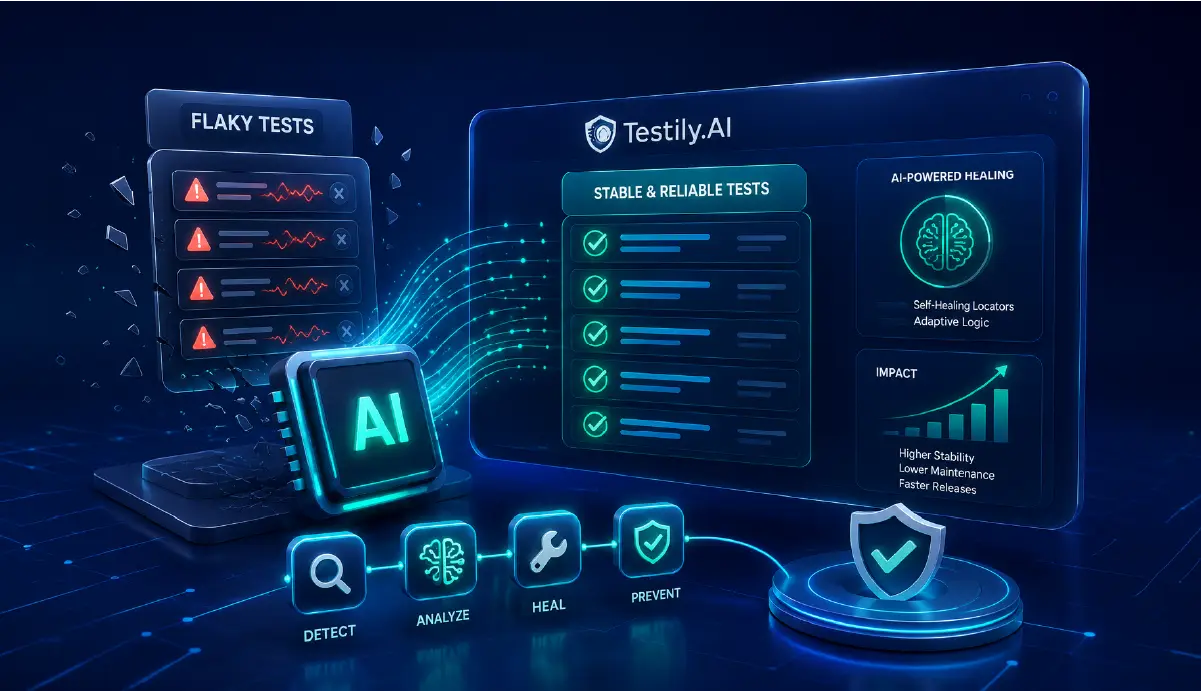
Autonomous testing tries to reduce that constant fixing. Instead of breaking every time something small changes, it adapts. It can regenerate tests, adjust flows, and keep things working without needing someone to step in every time. So instead of spending hours figuring out why something failed, the system handles more of that in the background. It’s less maintenance, basically. Tools like Testily.AI take this further by automatically adapting to UI and workflow changes, helping teams avoid the usual cycle of fixing and rerunning tests.
What It Feels Like in Practice
It’s not something you actively manage all day. That’s actually the point. It runs in the background, explores the app, identifies important paths, and keeps testing them. When something changes, it adjusts instead of just failing. So your team isn’t stuck fixing tests constantly. They can focus on things that actually need attention.
What Teams Usually Notice First
Most people expect things to get faster, and they do. But the bigger difference is how much less annoying everything feels. Fewer random failures. Less rerunning. Less second-guessing whether something is actually broken. Things just feel more stable, and that makes releases feel easier.
Is This Replacing QA Teams?
No. It’s just changing what QA teams spend time on. Instead of dealing with repetitive work and constant maintenance, they get to focus on the parts that actually need thinking. Edge cases. Weird behaviors. New features. Real user experience issues. The role doesn’t go away. It just becomes less about fixing tests and more about improving the product.
Why Teams Are Moving This Way
Mostly because the old way doesn’t scale well anymore. As products grow and release cycles speed up, the amount of maintenance starts getting out of hand, and teams get tired of it. So they start looking for ways to reduce that effort. Autonomous testing fits into that pretty naturally. Not because it’s flashy. Because it removes a lot of the repetitive work.
A Simpler Way to Look at It
Automation helped teams move faster. But it still needed a lot of human effort to keep working. Autonomous testing reduces that effort. It’s not about doing more. It’s about needing to do less just to keep things running.
What This Means for Your Team
If your team spends a lot of time fixing tests, checking failures, or rerunning things just to be sure, that’s usually a sign.
Not that testing is wrong. Just that the current setup needs too much care, and that’s where a different approach starts to make sense. Something that doesn’t break so easily. Something that doesn’t need constant attention. That’s the gap autonomous testing is trying to fill.
A More Practical Next Step
If this sounds familiar, you probably don’t need to rebuild everything. But it might be worth looking at how much effort your current setup actually takes to maintain.
Because that’s usually where the real cost is. Tools like Testily.AI are built around reducing that effort, helping teams move toward autonomous testing without adding more complexity or extra work, and when that effort drops, everything else tends to get easier too. Platforms like Testily.AI are designed to bring autonomous testing into real workflows, helping teams reduce maintenance effort while improving reliability and speed.
Ready to move beyond traditional automation? Testily.AI helps you adopt autonomous testing without the usual maintenance overhead.