


Why Quality Analysis Slows Everything Down Even When Nothing Seems Wrong
I was talking to an engineering manager recently, and what stood out wasn’t frustration. It was confusion. They weren’t blaming anyone. They weren’t even saying something was broken. They just said, “We’re slower than we should be, and I can’t figure out why.” That kind of problem is harder than obvious ones. When something is clearly broken, you fix it. If the codebase is messy, you clean it up. If the team is understaffed, you hire. But this wasn’t that. Everything looked fine. The team was capable. Releases were happening. Nothing was failing in a way that triggered urgency, and still, every release followed the same pattern: build → QA → wait → fix → retest → wait again. No single step looked inefficient. But together, the process carried weight. That’s how a Quality Analysis bottleneck usually starts. Not as a failure, but as friction that quietly becomes normal.
Quality Analysis Usually Doesn’t Look Like the Problem
If you ask most teams whether QA is blocking releases, the answer is usually no, and technically, that’s true. Tests are running. Bugs are being caught. Releases are going out. On paper, nothing looks wrong. That’s exactly why a Quality Analysis bottleneck gets ignored. Because the slowdown doesn’t come from one obvious issue. It comes from small, repeated actions:
- A test fails because a field changed
- Another breaks due to a selector update
- Someone checks if it’s a real issue or noise
- The test gets rerun “just to be sure.”
Individually, these are minor. But together, they create drag the kind that turns into a QA bottleneck in software testing without anyone noticing immediately.
Where the Time Actually Goes
Most teams think QA time = running tests. In reality, that’s only part of it. A large portion of time goes into maintaining the system around testing:
- Updating test cases after product changes
- Fixing brittle automation
- Investigating flaky failures
- Rerunning tests to confirm results
- Aligning test logic with evolving features
This is where a Quality Analysis process bottleneck really forms. Because as the product grows, this effort compounds. A small UI change can break multiple tests even when the feature works perfectly. So someone has to check → fix → rerun → validate, and that cycle repeats.
The Real Cost Shows Up Later
Early on, testing feels manageable. Writing tests is the main effort. Maintenance is minimal. But over time, that flips. Maintaining tests becomes the dominant cost. You can have:
- High coverage
- Strong automation
- Detailed reports
…and still experience a Quality Analysis bottleneck. Because behind those metrics, there’s constant manual effort holding everything together. You’ll hear it in conversations:
- “We’re almost ready.”
- “QA needs one more pass.”
- “Something failed; we’re checking it.”
Nothing sounds alarming. But when it happens every release, it’s a pattern.
It Gets More Noticeable as Teams Scale
Smaller teams can absorb this overhead. Fewer features. Fewer dependencies. Fewer tests. Even if the setup isn’t perfect, it works. But as the product grows:
- More features → more test cases
- More releases → less tolerance for delays
- More changes → more maintenance
That’s when the software QA bottleneck becomes visible. You start seeing a gap between “development done” and “ready to release,” and that gap keeps growing.
Adding More People Doesn’t Fix It
The default response is predictable: “Let’s add more QA.” Sometimes it helps briefly. But if the system itself creates friction, more people just spread the same work around. The issues remain:
- Tests are still fragile
- Failures still need investigation
- Manual effort still exists
- Confidence still fluctuates
That’s how a testing bottleneck in agile teams persists even with more resources.
What Actually Changes Things
Teams that fix this don’t focus on speed. They focus on reducing effort. Because speed is a result. Effort is the cause. When effort drops:
- Less time fixing tests
- Fewer unnecessary failures
- Higher trust in results
- Less manual intervention
That’s when the QA bottleneck starts disappearing.
Where Tools Like Testily.AI Fit In
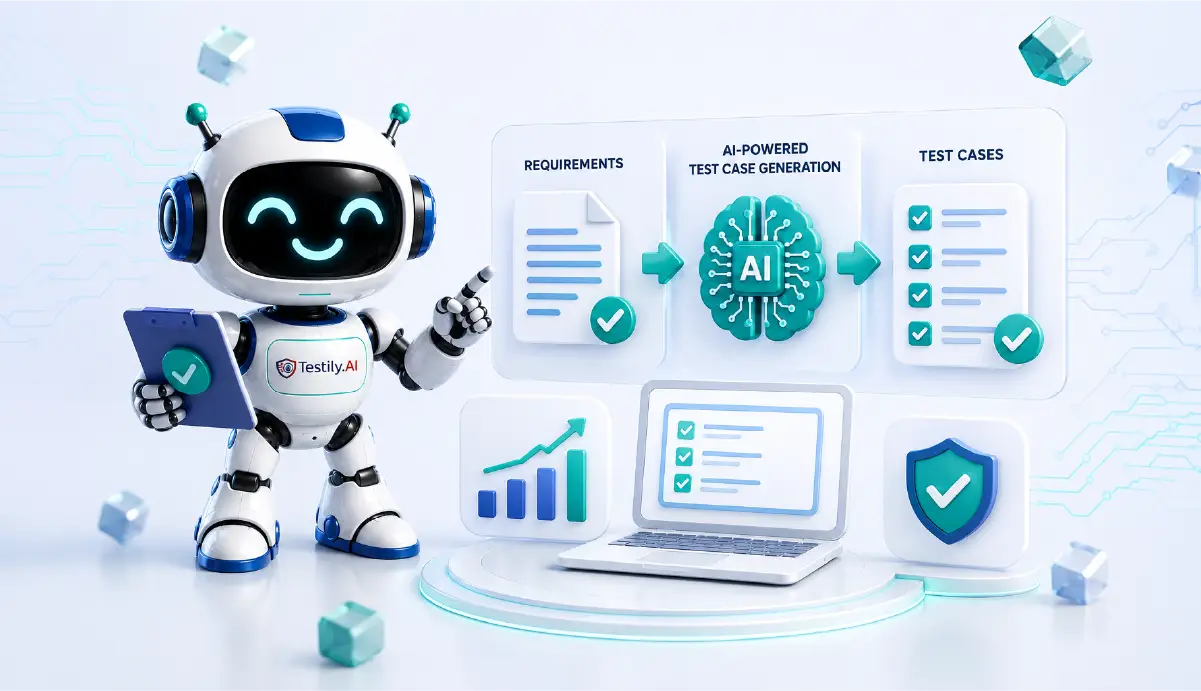
Testily.AI is designed around this exact problem. Not to run more tests but to reduce the effort around them. It helps teams:
- Reduce brittle and flaky tests
- Adapt to UI and workflow changes automatically
- Minimize constant maintenance work
- Improve confidence in test results
So instead of adding more layers, it removes the friction that creates a QA workflow slowdown.
The Pattern Is Usually Easy to Spot
Once you know what to look for, the pattern becomes obvious:
- Development is done, but release is delayed
- Small changes create large QA effort
- Failures are treated as “probably noise.”
- Retesting becomes routine
And most importantly: The slowdown always happens at the same stage. That’s the signal of a QA bottleneck in software testing.
It’s Not Really a Speed Problem
Most teams think they need to move faster. But the real issue is maintenance. If QA requires constant fixing, checking, and validating, it will slow everything down no matter how good the team is. Reduce that effort, and speed improves naturally. Releases feel lighter. Handoffs become smoother. Teams spend more time building. You don’t force speed. You remove resistance.
When QA Starts Slowing You Down, Look Deeper
If your team consistently slows down between “code complete” and “release,” it’s not random. It’s structural. Most teams don’t need a complete overhaul. But if your QA system demands constant attention just to function, that’s where the problem is. Reduce that internal load, and improvements show up quickly.
A Better Way to Think About QA
You don’t need more layers. You need less friction. When testing becomes the following:
- Stable
- Reliable
- Easier to maintain
Everything else starts moving naturally. Releases feel lighter. Workflows become clearer. Teams stop firefighting. That’s when QA stops being a bottleneck and becomes part of the flow.
How Testily.AI Helps
Modern QA problems aren’t about lack of effort. They’re about too much effort spent maintaining the system. Testily.AI helps by simplifying that system:
- Reduces time spent fixing brittle tests
- Adapts automatically to UI and workflow changes
- Combines manual + automated testing in one place
- Improves signal quality by reducing noise
Instead of adding complexity, it removes the conditions that create a QA bottleneck.
If This Feels Familiar…
You don’t need to push your team harder. You need to reduce the friction they’re dealing with.
→ See how teams are eliminating QA bottlenecks in real workflows
→ Or explore how to make your QA process faster without adding effort