


Everything feels fast… until testing shows up
Most teams don’t really notice it at first. Development is moving. Features are getting shipped. Deployments look smooth and frequent, and then at some point, things just… slow down. Not during development. During testing. That’s usually when people first start noticing software testing bottlenecks not as a failure but as a pattern that keeps repeating before every release.
It’s rarely actually a QA problem
This is where most assumptions go wrong. When delays happen, QA often gets blamed first. But in most real setups, QA is just where everything finally shows up. The real issue is usually how work flows through the system. Features get built first. Testing happens later, and everything that was unclear, incomplete, or rushed earlier suddenly lands in one place.
That’s how software testing bottlenecks actually form not because QA is slow, but because testing is positioned too late in the process.
Why QA ends up feeling overloaded
If you talk to most QA teams, the experience sounds pretty familiar. Everything feels fine until it suddenly doesn’t. Testing starts late, and by then there’s already pressure to release. So instead of slowing down and investigating properly, everything becomes time-bound.
Manual testing makes it harder to keep up as speed increases. It still works, but it doesn’t scale with modern release cycles. Automation is usually there too, but often it’s not structured well. So instead of helping, it creates its own maintenance load, and then there’s the hidden one: unstable environments and inconsistent test data. Tests fail, reruns pass, and nobody is fully sure why.
Over time, all of this starts stacking up as test automation challenges, even if nobody labels it that way at the beginning.
What it feels like in real delivery cycles
It doesn’t look dramatic. It looks like this: A release that was “almost ready” yesterday suddenly needs more fixes. QA cycles extend by a day or two. Teams start waiting on test results before making decisions, and slowly, testing becomes the point where momentum breaks. That’s when software testing bottlenecks become visible in everyday work.
What actually helps and it’s usually not complicated
The fixes are rarely about adding more tools or more tests. It usually starts with changing when testing begins.
When testing starts earlier, even slightly earlier, things already behave differently. Issues don’t pile up as much. QA doesn’t get flooded all at once. That’s the basic idea behind shift-left testing, and most teams underestimate how much difference it makes until they try it.
Another shift is treating testing as something continuous instead of something that happens at the end. When testing is spread throughout development instead of concentrated at the end, pressure naturally reduces. That’s what continuous testing really solves in practice.
Automation also needs attention, but not in the “add more tests” way. Most teams don’t need more automation; they need cleaner automation. Something maintainable, structured, and not tightly coupled to every small UI change. That’s where a proper QA automation strategy matters more than coverage numbers.
Where AI actually fits into this
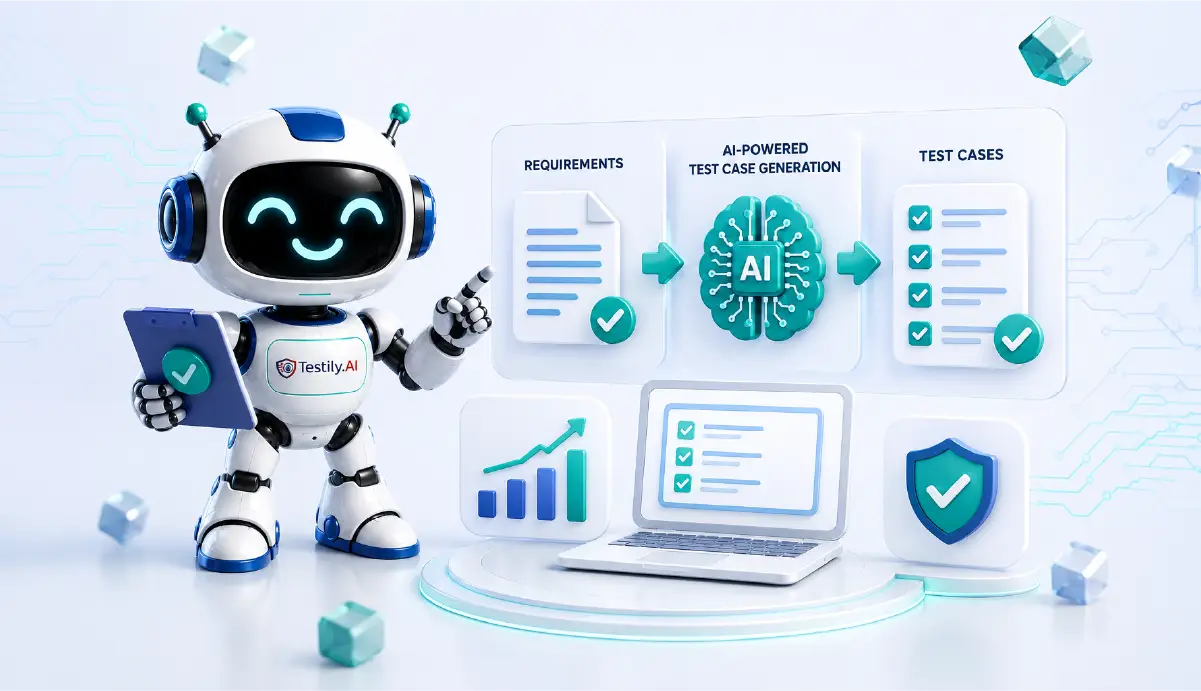
AI doesn’t replace QA or magically remove bottlenecks. But it does help reduce some of the repetitive work that slows teams down. Things like identifying unstable tests, reducing maintenance effort, and improving test coverage visibility are where AI in testing is becoming useful in real workflows. Tools like Testily.AI fits into this space not by changing how QA works completely, but by reducing the noise that builds up around it.
So is QA really the bottleneck?
Not really. QA is just where the slowdown becomes visible. The actual bottleneck is usually earlier in how work is planned, how testing is introduced, and how aligned teams are while building features. Once that changes, software testing bottlenecks don’t disappear instantly, but they stop being a constant pattern.
Why QA Only Looks Like the Bottleneck
When teams say QA is slowing everything down, it usually sounds like a people problem. But in most cases, it isn’t. It’s a timing problem. If testing always happens at the end, it will always feel like a bottleneck. But when it becomes earlier, continuous, and more connected to development, QA stops acting like a blocker and starts acting like a stabilizer. That’s usually the real shift teams are looking for even if they don’t phrase it that way.
What’s starting to change now is how much effort testing actually needs to keep working.
Instead of systems that constantly require fixing, teams are slowly moving toward setups that stay stable as the product evolves.
That’s also where platforms like Testily.AI are beginning to fit in not by adding more tests but by reducing the maintenance and noise that usually builds up around them, and when that noise goes down, QA doesn’t feel like a bottleneck anymore. It just becomes part of the flow.