

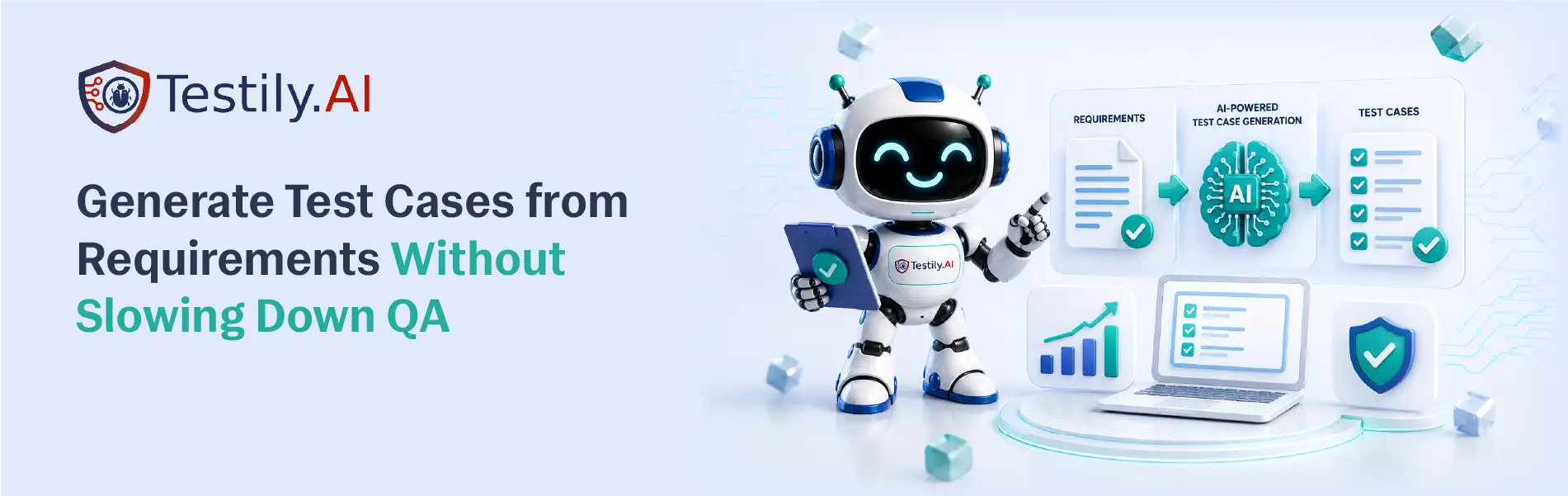
Generate Test Cases from Requirements Without Slowing Down QA
Most teams don’t realize how much time disappears before testing even starts. Not execution. Not debugging. Not automation maintenance. Just creating the test cases themselves. Someone reads the requirement document. Someone interprets the flow. Someone decides what should be tested, what matters most, and what can be ignored for now. Then the real work begins.
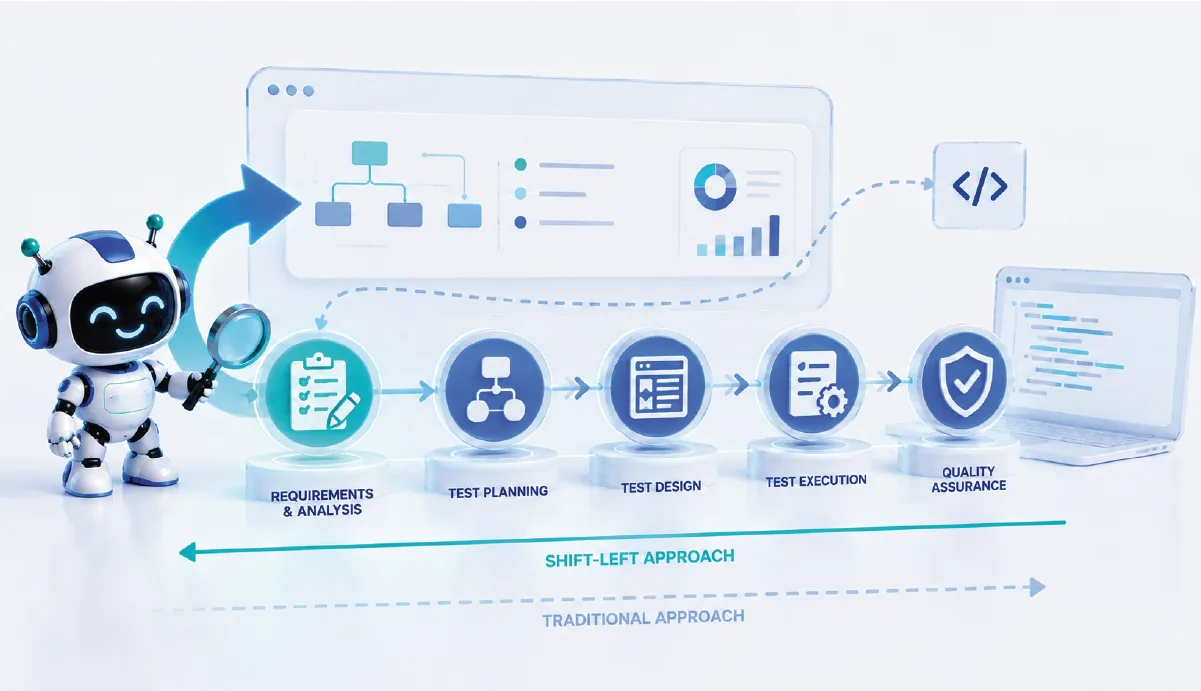
For growing teams, this process quietly becomes one of the slowest parts of QA. That’s exactly why more companies are trying to generate test cases from requirements using AI-driven workflows instead of relying completely on manual effort. The goal isn’t replacing QA thinking.
It’s reducing repetitive work that keeps slowing teams down. That’s where platforms like Testily.AI start becoming useful in a very practical way.
Why Test Case Creation Takes Longer Than Teams Expect
At first, writing test cases feels manageable. A few user stories. A few validation flows. Some regression checks. Nothing complicated. But as products grow, requirements become larger, releases become faster, and suddenly QA teams spend a surprising amount of time just trying to keep test scenarios updated.
A small feature update creates:
- New edge cases
- Updated workflows
- Dependency changes
- Modified validations
And all of that impacts testing. This is usually the point where teams begin looking for better ways to generate test cases from requirements without manually rebuilding everything every sprint.
The Problem Isn’t Writing Tests: It’s Rewriting Them Constantly
This is what most teams eventually notice. Creating test cases once isn’t the hard part. Maintaining them is. Requirements evolve continuously:
- UI flows change
- Business rules shift
- APIs get updated
- Onboarding logic changes
- Workflows expand
And QA teams end up spending more time updating old test cases than creating useful new ones. That’s one of the biggest reasons AI-driven requirement-based testing is becoming more important now. Not because teams want fewer testers. Because they want less repetitive maintenance work. Testily.AI helps reduce this burden by automatically turning product requirements into structured test scenarios that QA teams can refine instead of building manually from scratch every time.
Why Manual Requirement Analysis Slows Everything Down
Most requirement documents are not written for testing. They’re written for:
- Product teams
- Stakeholders
- Developers
- Sprint planning
Which means QA engineers still need to:
- Interpret intent
- Identify missing scenarios
- Map dependencies
- Define validations
- Organize coverage
That process takes time, and when releases move quickly, QA teams rarely get enough breathing room to do it deeply every sprint. This is exactly where teams now use AI to generate test cases from requirements more efficiently. Instead of starting from a blank page, they start with structured suggestions that can be reviewed, expanded, and prioritized. That shift alone saves significant effort.
What AI Actually Changes in Test Case Generation
There’s a misconception that AI simply “writes tests automatically.” That’s not really the valuable part. The real advantage is reducing the repetitive setup work around testing.
Modern AI-driven platforms can:
- Analyze requirement documents
- Identify functional flows
- Detect possible validation paths
- Suggest edge cases
- Organize scenarios automatically
- Reduce repetitive documentation work
That’s why teams increasingly use platforms like Testily.AI to generate test cases from requirements while keeping QA engineers focused on decision-making instead of repetitive drafting. The human role still matters heavily. AI accelerates preparation. QA teams still decide:
- What matters most
- What carries risk
- What deserves deeper validation
Why Faster Test Creation Matters More in Agile Teams
In slower release cycles, manual test creation was manageable. Modern delivery cycles are different. Requirements change continuously:
- Sprint updates
- Mid-cycle feature revisions
- UI iterations
- Rapid deployments
- Hotfix releases
When testing preparation cannot keep pace, QA becomes reactive instead of proactive. That’s when:
- Coverage gaps appear
- Rushed validation increases
- Edge cases get skipped
- Release confidence drops
Teams that generate test cases from requirements earlier and faster usually maintain better testing stability over time. Testily.AI supports this by helping QA teams quickly transform changing requirements into structured test coverage without rebuilding everything manually every release cycle.
The Bigger Benefit Isn’t Speed; It’s Consistency
Most teams initially look at AI because they want faster testing. But the long-term value usually comes from consistency. Manual test creation often varies depending on:
- Who wrote the cases
- How detailed the requirement was
- Time pressure
- Release urgency
- Team experience
That inconsistency creates uneven coverage.AI-assisted workflows help standardize the process. Not perfectly.
But enough to:
- Reduce missed scenarios
- Improve documentation consistency
- Maintain structured coverage
- Reduce dependency on individual workflows
This is one of the reasons teams increasingly rely on Testily.AI to generate test cases from requirements across fast-moving projects.
What Teams Usually Notice First
The first improvement usually isn’t “AI-generated testing.” It’s something simpler. QA teams stop spending hours formatting repetitive scenarios.
Instead of:
- Rewriting similar validations
- Manually organizing flows
- Rebuilding regression scenarios repeatedly
They spend more time:
- Reviewing risk
- Improving coverage quality
- Validating business logic
- Focusing on product behavior
That’s a much healthier use of QA expertise, and over time, it significantly improves software testing efficiency.
Why This Matters for Scaling Products
As products scale, requirement complexity grows faster than most teams expect. More integrations. More user flows. More dependency chains. More release coordination. Manual testing workflows struggle under that weight. Not because QA engineers lack skill. Because the volume itself becomes difficult to manage manually. That’s why the ability to generate test cases from requirements efficiently is becoming increasingly important for modern QA teams. Platforms like Testily.AI help reduce that operational pressure by simplifying test creation and keeping testing aligned with rapidly evolving product requirements.
AI Doesn’t Replace QA Judgment
This part matters. AI can help organize, accelerate, and structure testing workflows.
But it still cannot:
- Fully understand business risk
- Prioritize product impact
- Evaluate user frustration
- Define release confidence
- Replace exploratory thinking
That’s still human work. The strongest teams are not replacing QA engineers with AI. They’re removing repetitive effort so QA teams can focus on higher-value decisions. That’s the practical role of platforms like Testily.AI plays a role in modern testing workflows.
What Better Test Creation Actually Feels Like
When this process improves, the difference becomes noticeable quickly.
Teams experience:
- Less rushed QA preparation
- Fewer missed scenarios
- Faster sprint validation
- Cleaner regression planning
- Reduced manual documentation work
Most importantly, testing stops feeling like it’s constantly trying to catch up. That’s usually the real sign the workflow is improving.
How Testily.AI Helps
Generating test cases manually becomes difficult when requirements evolve continuously. Testily.AI helps teams reduce this effort by combining AI-driven test generation with scalable QA workflows.
With Testily.AI, teams can:
- Generate test cases from requirements faster
- Reduce repetitive documentation effort
- Improve requirement-based test coverage
- Adapt quickly to changing workflows
- Maintain consistency across releases
- Reduce QA preparation overhead
Instead of spending excessive time creating and maintaining test cases manually, teams can focus more on validating quality, reducing risk, and improving release confidence.
Final Thoughts
Most QA delays don’t begin during execution. They begin earlier, during preparation. When teams spend too much time manually translating requirements into testing workflows, everything downstream slows with it. That’s why more organizations now generate test cases from requirements using AI-assisted platforms like Testily.AI Not to remove QA expertise. To give QA teams more time to use that expertise where it matters most.