

QA Testing in 2026: Why Most Teams Are Still Getting It Wrong
Let me paint you a picture. It’s the day before a release. The dev team is done. The product manager is excited. And your QA engineer is staring at a test suite that hasn’t been updated in six weeks, half of which is failing for reasons nobody can explain.
Sound familiar? This isn’t a story about bad engineers or lazy teams. It’s a story about a QA testing process that was designed for a different era and hasn’t caught up yet.
The Old Way Doesn’t Work Anymore
Five years ago, software teams shipped monthly. There was breathing room. QA could sit at the end of the pipeline, run through the test cases, log the bugs, and go home reasonably happy.
That’s not how it works now. Teams ship weekly. Sometimes daily. A single app might run on web, iOS, and Android and talk to a dozen APIs at the same time. And every single release has the potential to silently break something that was working perfectly last Tuesday.
The old approach to quality assurance testing, testing late, testing manually, fixing, and repeating, creates a bottleneck that slows down every team it touches. Developers wait. The product gets frustrated. And QA engineers burn out trying to cover more ground with the same hours.
This is the exact problem Testily.AI was built to solve. Not by adding more automation for automation’s sake, but by making the whole QA testing process smarter from the moment a requirement is written to the moment code ships.
What QA Testing Should Actually Look Like
Here’s the honest version: good software testing isn’t about finding every bug. It’s about finding the bugs that matter, before your users do.
That means testing the right things, in the right order, with the right mix of human judgment and automation. It means your regression suite doesn’t collapse every time a designer moves a button. It means a new developer can push code at 4pm on a Friday without the whole team holding their breath.
Testily.AI helps teams get there by combining AI-assisted test generation with practical test management, so QA engineers spend less time writing boilerplate test cases and more time actually thinking about quality.
The Testing Types That Actually Matter
Every QA testing program needs to cover a few core areas. Not because a certification body says so, but because each one catches a different category of problem.
Functional testing is the baseline. Does the login work? Does the checkout complete? Do the filters return the right results? If your functional coverage has gaps, everything else is built on sand.
Regression testing is where most teams bleed time. Every sprint introduces changes. Every change carries risk. Running a full regression manually takes hours. Running broken automation takes just as long and gives you nothing useful. Testily.AI makes regression suites easier to maintain, meaning they actually stay current instead of becoming shelfware.
Integration testing catches the failures that happen between systems. Your payment service might work fine on its own. Your inventory system might work fine on its own. But what happens when they talk to each other under load? That’s what integration testing is for, and it’s where a lot of production incidents are born.
UI testing is the one teams love to hate. It’s valuable, fragile, and time-consuming to maintain. One design change and suddenly 40 tests are broken. Testily.AI specifically addresses this, reducing the upkeep burden so UI automation doesn’t become a second job.
Manual Testing Isn’t Dead. It’s Just Misused.
There’s a tendency in engineering teams to treat manual software testing as the thing you do when you haven’t automated enough yet. That’s wrong, and it leads to some expensive mistakes.
Manual testing is where experienced QA engineers do their best work, exploring edge cases nobody thought to specify, catching UX problems that a script would never notice, and using genuine domain knowledge to poke at the parts of the application most likely to break in the real world.
Automation handles repetition. Humans handle judgment. The teams that confuse the two end up with either brittle automation or undertested products. Testily.AI is designed around this reality. It brings manual and automated workflows together in one place, so QA teams can use each approach where it actually belongs.
Why AI Changes the Math on QA
The knock on AI in quality assurance testing used to be that it was overhyped, all promise, no delivery. That’s changed. Teams using AI-powered testing today are solving specific, concrete problems.
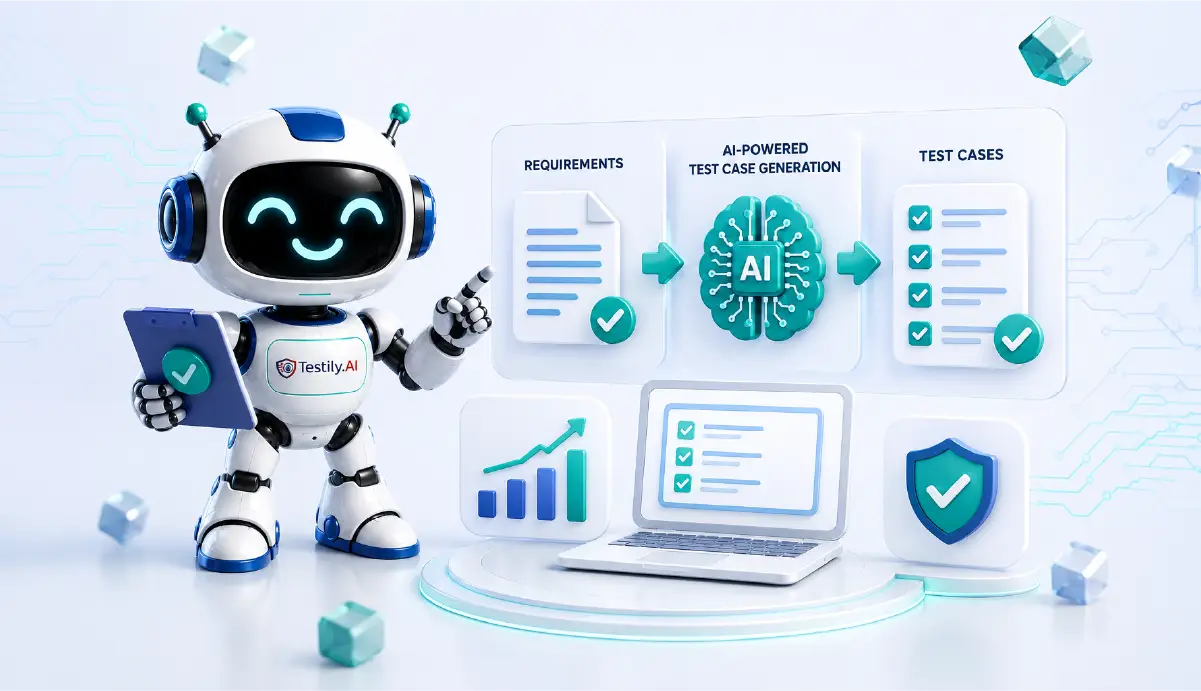
Writing test cases from scratch used to take hours. With Testily.AI, QA engineers can generate initial test scenarios from requirements and spend their time refining and improving them instead of starting from a blank page.
Flaky tests used to be a silent killer, tests that pass sometimes and fail sometimes and train your team to ignore automation results. Testily.AI surfaces instability early, before it infects your team’s confidence in the whole suite.
Keeping tests current as the application evolves used to require constant manual effort. Testily.AI reduces that overhead so your test suite ages gracefully instead of becoming a maintenance nightmare.
None of this replaces QA engineers. It just removes the parts of the job that were never a good use of their time.
The Real Reason Teams Switch to Testily.AI
It’s not the feature list. It’s the math.
When a QA engineer spends three hours a week updating broken test scripts, that’s three hours not spent on exploratory testing, risk analysis, or building better coverage. Multiply that across a team and across a year, and you’ve quietly lost thousands of hours of actual quality work to infrastructure maintenance.
Testily.AI gives those hours back. Teams that switch report faster release cycles, more stable automation, and QA engineers who are actually energized by their work again because they’re spending time on the parts that require their expertise, not the parts that don’t.
If your team is treating QA testing as a necessary burden rather than a genuine competitive advantage, that’s worth examining. The teams shipping reliable software fast aren’t doing it with bigger QA headcounts. They’re doing it with smarter processes and better tools.