


Scaling QA for Fast-Growing SaaS Teams
Scaling a SaaS product is exciting. Scaling QA… not so much. Everything feels fine in the beginning. Small team, manageable releases, quick fixes. Then growth happens. More users. More features. More deployments, and slowly, QA starts falling behind. That’s the reality of scaling QA for fast-growing SaaS teams. This is usually when teams start exploring platforms like Testily.AI, which help scale QA workflows without adding more maintenance overhead.
Where things start breaking
Not immediately. At first, automation helps. Then:
- Tests start failing randomly
- Pipelines slow down
- Debugging takes longer
And suddenly, QA becomes the bottleneck even if no one planned it that way. At this stage, it’s usually not just about scale anymore. A lot of teams also start noticing tests behaving inconsistently, failing once and passing the next time, which makes debugging even harder than it should be. Tools like Testily.AI help reduce this instability by identifying flaky behavior early and improving consistency across test runs.
What’s actually happening
The problem isn’t effort. It’s scale. More features mean more test coverage. More integrations. More edge cases. Without a clear QA automation strategy, things grow… but not in a controlled way. That’s where scaling QA for fast-growing SaaS teams becomes difficult, and when that lack of structure continues, QA doesn’t just struggle to keep up; it slowly starts feeling like the slowest part of the entire delivery process. Testily.AI helps teams bring structure to this growth by reducing chaos in test automation and improving how testing scales alongside development.
What teams usually try first
Most teams respond by adding more tests. More scripts. More coverage. But that rarely fixes the issue. Because the problem isn’t quantity. It’s stability.
What actually works
Start earlier: Adopting practices similar to CI/CD testing helps reduce last-minute pressure.
Fix automation, don’t just expand it: Weak automation creates more work over time.
Reduce dependency on UI-heavy testing: UI tests are fragile. Balance them with API and unit tests.
Improve collaboration: QA and dev working separately slows everything down.
Where AI starts helping
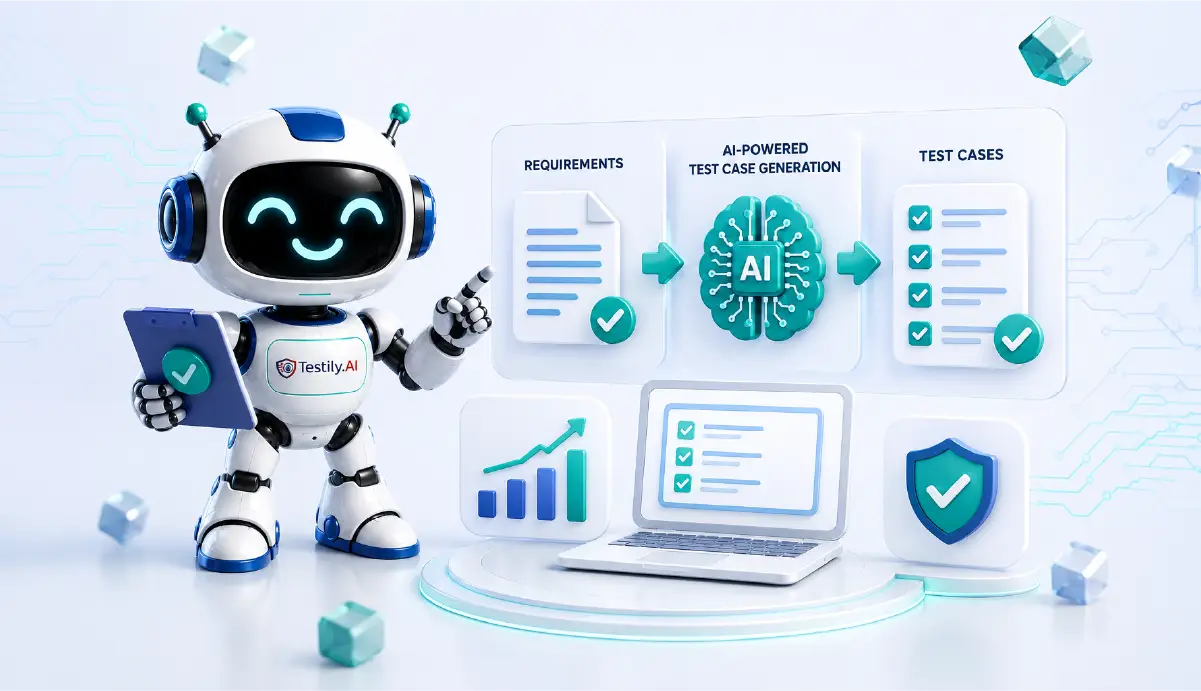
This is where platforms like Testily.AI start making a practical difference. Instead of constantly fixing tests, teams can reduce instability and improve automation reliability without increasing maintenance effort.
What teams eventually figure out
QA doesn’t break overnight. It slowly stops keeping up, and fixing it isn’t about adding more; it’s about changing how testing fits into the workflow. Interestingly, many teams hit this stage even after improving how early they test. Starting earlier helps, but keeping everything stable as the product grows is a different challenge altogether.
Scaling your SaaS product but struggling to scale QA? Testily.AI helps you reduce flaky tests and keep your automation stable as your product grows.