

At some point, maintaining tests becomes the real work
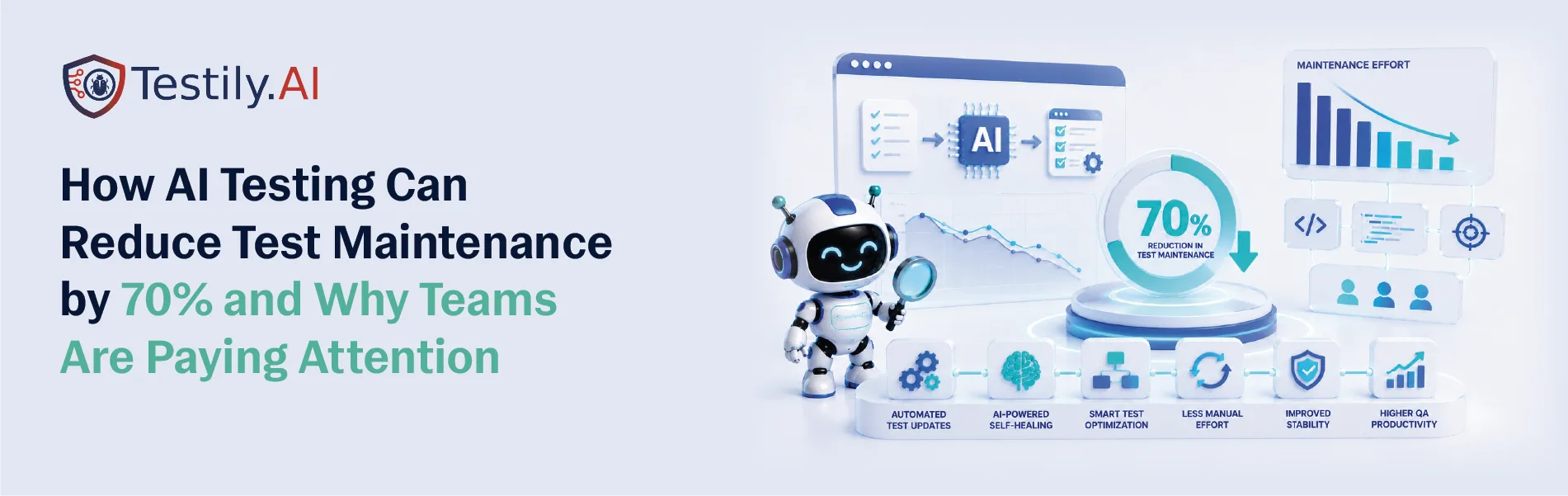
Most teams don’t feel the pain at the beginning. Automation feels like progress. Tests run. Pipelines look stable. Everything seems under control. But slowly, things change. A few tests fail. You fix them. Then more breaks, and without realizing it, your effort shifts from building coverage… to maintaining it. That’s usually when teams start seriously exploring AI testing not as a trend but as a way to reduce test maintenance by 70% and escape constant firefighting.
The real issue isn’t automation; it’s what comes after
Automation works. It runs tests. It improves coverage. But it also creates something teams don’t fully plan for: maintenance overhead. Every small change leads to:
- Broken locators
- Unstable runs
- Repeated debugging
And this becomes routine. This is where AI starts making a practical difference by reducing the ongoing effort that automation creates.
What actually changes with AI testing
AI doesn’t replace your framework. It changes how much effort it needs. Tests become less fragile. Failures become clearer. Fixes take less time. That’s where teams begin to see how AI testing can reduce test maintenance by 70% in real workflows, not just in theory.
Where teams feel the impact first
1. UI changes stop breaking everything
Small UI updates no longer cascade into failures. Tests adapt. This is often the first sign that AI is working.
2. Failures become meaningful
Instead of guessing:
- Is it flaky?
- Is it real?
AI testing helps identify patterns. Which means less time debugging and more time fixing real issues.
3. Test suites stay aligned with the product
Normally, tests lag behind product changes. With AI , they evolve alongside it. That alone significantly reduces maintenance effort.
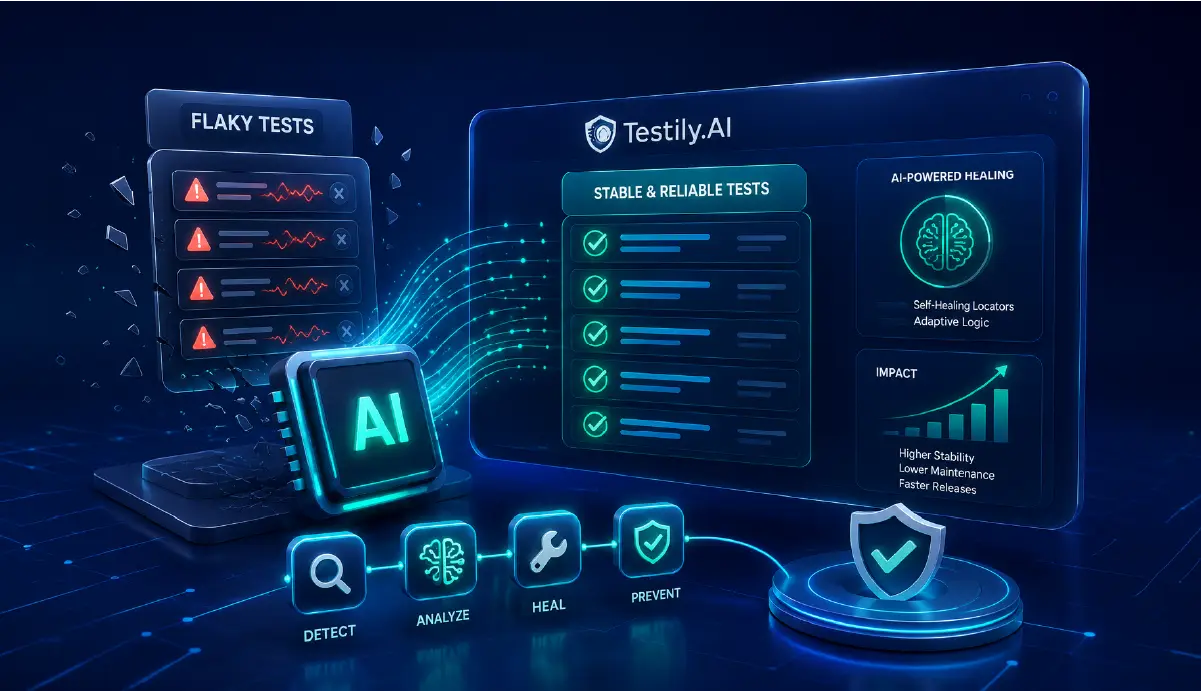
4. Flaky tests stop dominating your time
Flaky tests are one of the biggest hidden costs. They:
- Fail randomly
- Pass on reruns
- Kill trust
AI testing reduces this instability by learning from patterns. This is where teams most clearly experience up to a 70% reduction in maintenance effort.
What “70% reduction” actually means
Let’s keep it real. It doesn’t mean
- Zero maintenance
- Zero debugging
- Fully autonomous QA
It means:
- Fewer repetitive fixes
- Less debugging time
- More stable runs
- Reduced daily firefighting
In simple terms: You stop solving the same problem repeatedly.
How teams adopt AI testing (without disruption)
No big overhaul. Most teams start small:
- Flaky test suites
- Regression packs
- High-maintenance flows
Then introduce:
- Self-healing tests
- Failure pattern detection
- Intelligent updates
That’s how AI testing scales gradually and safely.
A quick reality check
AI testing is powerful but not magic. If:
- Test design is weak
- Requirements are unclear
- Processes are messy
Then AI will only optimize inefficiency. The best results come when AI supports a solid QA foundation.
Why teams are paying attention now
Earlier, maintenance was tolerated. Now it’s a problem. Because:
- Releases are faster
- CI/CD is constant
- QA cycles are shorter
In this environment, AI isn’t optional anymore; it’s practical.
Where Testily.AI fits in
This is exactly what platforms like Testily.AI focuses on. Instead of replacing your system, it helps:
- Reduce repetitive maintenance
- Stabilize automation
- Keep tests aligned with changes
So your team can focus on quality not upkeep.
Why this shift matters
Automation was supposed to reduce effort. But for many teams, it just shifted effort to maintenance. With AI testing, that balance starts correcting itself. Less fixing. More building. Better releases.